

After a Seed or Series A round, the clock starts immediately. Investors expect traction within quarters, not years. Your website becomes your primary acquisition channel, hiring signal, and credibility layer at the same time. Yet most startups lose their first 60 to 90 days post-funding because their site is either unfinished, slow, or built as an afterthought.
The cost of getting this wrong is not cosmetic. Hiring one senior developer and one product designer typically costs $180,000 to $250,000 annually, and recruiting alone can take 8 to 12 weeks. During that time, launches stall, paid campaigns underperform, and inbound leads drop because there is nothing conversion-ready to send traffic to. Every delayed month quietly compounds into lost pipeline and missed revenue.
Funded startups that move faster treat their website like infrastructure, not a side project. They partner with an experienced web development agency that can design, build, and ship a scalable, SEO ready website development foundation in 30 to 60 days. The result is simple and measurable: earlier launch, faster lead flow, stronger credibility with customers and senior hires, and no rebuild six months later.
If you’re planning to hire a web development company, this guide explains what your website should realistically deliver after funding, how to evaluate the best web development agency, what it should cost, and how to avoid the hiring decisions that slow most startups down.
What a Website Should Actually Deliver 90 Days After Funding?
Most funded startups treat the website like a design exercise. They debate colors, copy, and animations while the business waits. Three months disappear and nothing meaningful ships. Traffic has nowhere to land, paid campaigns underperform, and sales teams are forced to pitch from Notion docs and demo links.
Ninety days after funding, your website should not still be “in progress.” It should already be working as an acquisition asset.
Outcome – 1
A functional, growth-ready site should launch within 30 to 60 days, not a quarter. That is enough time for strategy, UX, development, and deployment when handled by an experienced web development agency with a defined process. Anything longer usually signals hiring delays, unclear ownership, or rework.
By day 90, you should see measurable signals, not promises.
- Core pages live and indexed
- Demo, trial, or lead forms converting at 2 to 5%+ minimum
- First organic impressions and keyword rankings starting
- Page speed under 2.5s load time
- Sales and paid traffic sending users to dedicated landing flows, not generic pages
These are baseline expectations, not stretch goals.
Outcome – 2
The second outcome is credibility. Senior hires, enterprise prospects, and investors judge maturity within seconds. A weak site silently communicates early-stage chaos. A strong B2B startup website design communicates stability and competence. That perception directly affects close rates and hiring success, even if no one says it out loud.
Outcome – 3
The third outcome is compounding growth. When the foundation includes SEO ready website development, technical structure, metadata, clean architecture, and scalable CMS, organic visibility starts building immediately. Waiting six months to “add SEO later” means forfeiting six months of compounding traffic you never get back.
Funded startups should treat the first 90 days as a launch window, not a planning phase. The objective is simple: ship fast, capture leads early, and create an asset that scales with growth.
If your website cannot do that, then your foundation is weak.
Why Most Seed & Series A Startups Make the Wrong Hiring Decision?
After funding, many teams default to hiring internally instead of working with a web development agency. It feels like ownership and control. In reality, it is usually the slowest and most expensive way to get a production-ready site live.
The numbers are hard to ignore:
- $180,000 to $250,000/year for one senior developer and one product designer
- $300,000+ true cost after benefits, tools, and recruiting fees
- 8 to 12 weeks lost in hiring before development even begins
- 10 to 15 founder hours per week spent interviewing and managing
- Zero launch progress during the entire hiring cycle
During this delay, paid campaigns underperform, SEO does not start, and sales teams have nothing credible to send prospects to. Growth stalls before it begins.
This is why many funded teams choose to hire a web development company instead. A specialized partner can ship faster, bring proven processes, and deliver outcomes immediately, not after a quarter of recruiting.
At the Seed and Series A stage, speed beats headcount. The best web development agency gets you live in weeks while in-house hiring keeps you waiting months.
What to Look for in a Web Development Agency for Funded Startups?
Choosing the right web development agency after Seed or Series A funding is a growth decision, not a design decision. The wrong partner delays launch, weakens conversion, and forces rebuilds within a year. The right partner accelerates go-to-market and builds scalable infrastructure from day one.
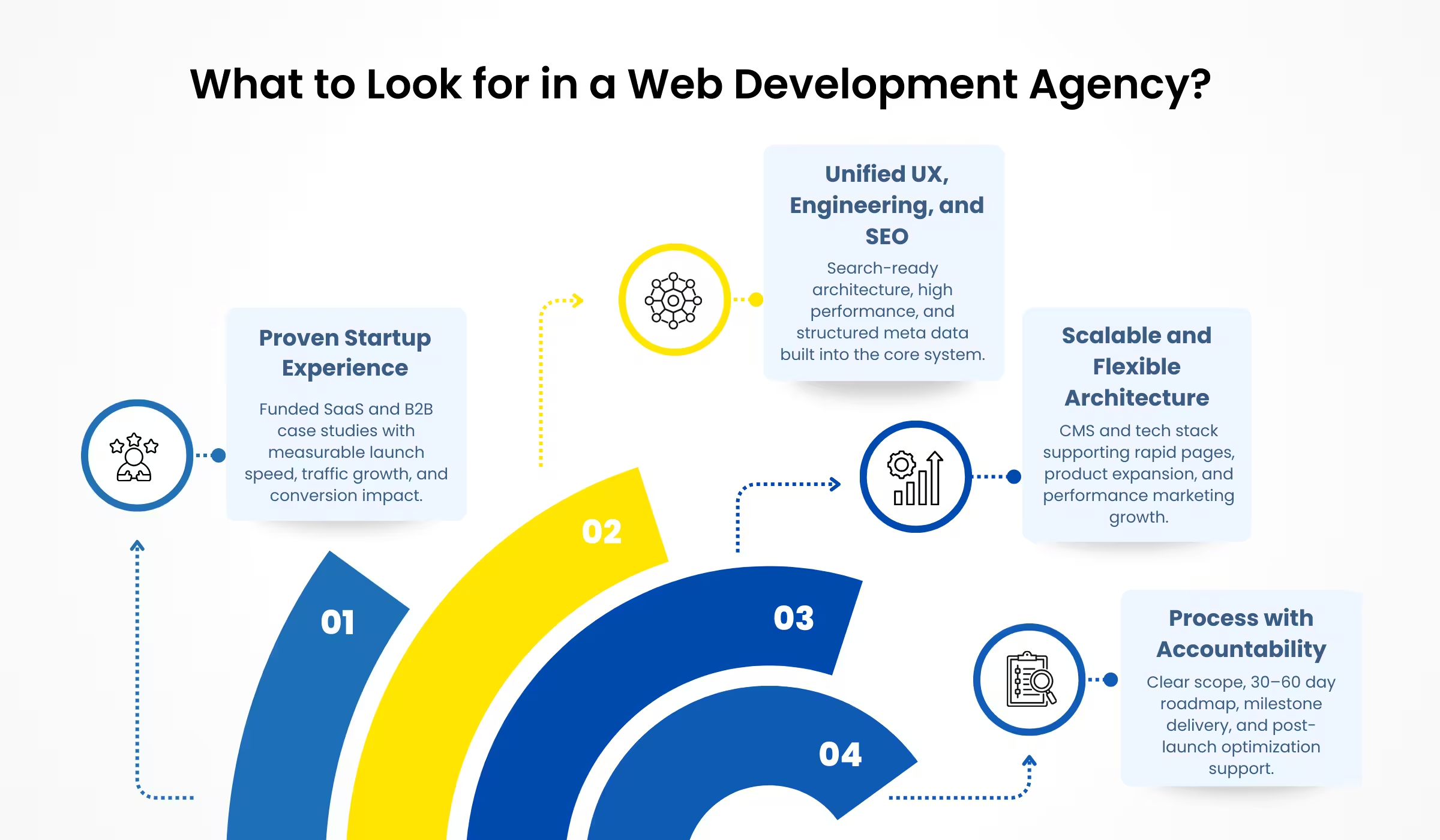
1. Proven Experience with Funded Startups
An agency that understands website development for Series A startups knows the difference between an MVP site and a growth-stage platform. Ask for case studies involving funded SaaS or B2B companies. Look for measurable outcomes such as launch timelines, traffic growth, or conversion improvements.
2. Integrated UX, Engineering, and SEO
A serious SaaS website development agency delivers design, development, and SEO ready website development as one system. Technical SEO, site architecture, performance optimization, and metadata should be built into the foundation, not added later.
3. Scalable Architecture
For B2B startup website design, the stack must support landing pages, product expansion, and performance marketing without rework. CMS flexibility and fast deployment cycles are essential.
4. Defined Process and Accountability
The best web development agency provides:
- Clear scope documentation
- 30 to 60 day launch roadmap
- Milestone-based delivery
- Post-launch optimization support
Funded startups do not need creative vendors. They need execution partners who build assets that support growth, hiring, and revenue from day one.
Idea Fueled vs In-House: What Actually Makes Sense at This Stage

After funding, startups usually face one choice: build an internal team or partner with a web development agency. The decision directly affects launch speed, cost, and early revenue. Here’s how the two approaches compare in the first six months:
| Factor | In-House Hiring | Web Development Agency |
| Time to start | 8–12 weeks recruiting | Immediate kickoff |
| Time to launch | 3–5 months total | 30–60 days |
| 6-month cost | $300k+ fully loaded team | Fraction of that, fixed scope |
| Founder involvement | High (hiring + management) | Low (strategy reviews only) |
| Risk of rework | High if early hires misaligned | Lower with proven process |
| Scalability | Depends on team maturity | Built for growth from day one |
Hiring makes sense once product-market fit is stable and execution is predictable. At Seed and Series A, speed matters more. Most funded teams choose to hire us because launching earlier creates pipeline, credibility, and traction faster than building a team from scratch.
If too late, launch costs more than agency fees.
What Should a Web Development Agency Guarantee Before You Sign?
Before signing with a web development agency, you should secure written guarantees for launch timeline, performance benchmarks, SEO readiness, defined scope, and post-launch support. Without these commitments, delays, scope creep, and rework are common.
These guarantees protect time-to-market and budget, which are critical for Seed and Series A startups. At minimum, your contract should include:
- Launch timeline: 30 to 60 day delivery with milestone dates
- Performance benchmarks: Sub-3 second load times, mobile optimized, Core Web Vitals passing
- SEO ready website development: Technical SEO, indexing, sitemap, schema, and metadata included at launch
- Defined scope: Exact pages, templates, integrations, and features listed to prevent scope creep
- Post-launch support: 30 to 90 days of fixes and optimization included
- Single accountable owner: One decision-maker responsible for delivery
The best agency commits to measurable outcomes because the process is already proven. If commitments are vague, expect missed deadlines.
How to Evaluate a Web Development Agency in the First Two Calls?
You should be able to qualify or eliminate a web development agency within two calls. If evaluation takes weeks, the process is already inefficient. In the first two conversations, focus on proof, process, and speed. Not just portfolios.
Questions to ask:
- How fast can you launch a production-ready site? (look for 30–60 days, not “it depends”)
- Have you handled website development for Series A startups or funded SaaS companies before?
- What does your SEO ready website development include at launch?
- Who owns delivery and how are milestones tracked?
- What measurable outcomes have you delivered (traffic, conversions, launch timelines)?
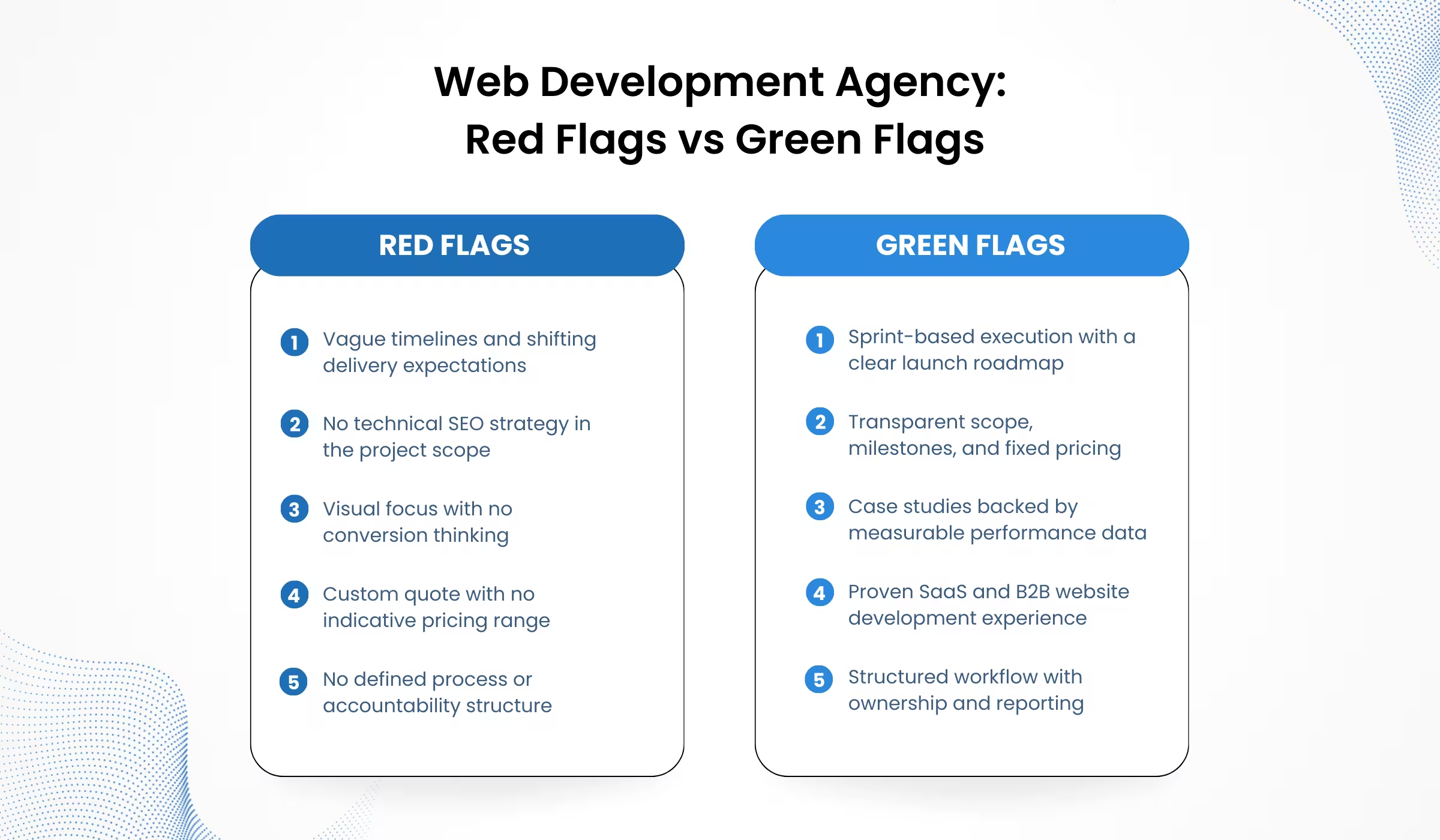
Red flags to look out:
- Vague timelines
- No technical SEO plan
- Heavy focus on visuals over conversion
- “Custom quote after discovery” with no ranges
- No clear process or accountability
Positive signals to note:
- Defined sprints and launch roadmap
- Clear scope and pricing
- Case studies with numbers
- Experience as a SaaS website development agency
An effective agency makes decisions easy. So, if you leave calls confused, expect the project to feel the same.
Is Hiring a Web Development Agency Worth It for Seed & Series A Startups?
Yes. For most Seed and Series A companies, hiring a web development agency delivers faster ROI than building an internal team because it shortens time-to-market by months and starts generating leads sooner.
An experienced agency can launch in 30 to 60 days. Hiring in-house typically takes 3 to 5 months including recruiting, onboarding, and execution. That difference creates 90 to 120 extra days of live traffic, demo bookings, and revenue opportunities.
Again, the math is simple:
- Earlier launch will lead to earlier pipeline and customer acquisition
- Conversion-focused B2B startup website design will result in higher lead-to-demo rates
- SEO ready website development will lead to organic traffic compounding from month one
- No hiring overhead, $300k+ saved in fully loaded team costs
- No rebuilds will result in lower long-term engineering expense
Even modest results, such as 20 to 30 qualified leads per month, can offset agency fees within a quarter. So at this stage, the real cost is not agency spend. It is delayed execution and for funded startups, speed creates ROI. The best web development agency like us, Idea Fueled simply gets you there faster.
Conclusion
After Seed or Series A funding, your website cannot afford to be a placeholder. It must support acquisition, investor confidence, hiring, and revenue. If it launches late or underperforms, momentum slows immediately.
Hiring internally may feel strategic, but recruiting cycles and fully loaded salaries often delay execution by months. Partnering with an experienced web development agency shortens time-to-market and delivers a production-ready foundation faster. When speed improves, pipeline builds earlier and growth compounds sooner.
The real decision is not design preference. It is execution speed versus delay. Startups that move quickly capture demand while competitors are still building teams. Choosing the right partner means launching with performance, scalability, and long-term visibility in place from day one.
At this stage, time is leverage. Protect it.
Do Not Let Momentum Stall
Funding creates opportunity. Delays erase it.
Idea Fueled helps startups launch fast with scalable, conversion-focused websites that support growth from day one quite literally. We keep our pipeline small so projects ship quickly. If your roadmap depends on launching soon, secure your build early.
Start early and stay ahead with Idea Fueled.
Frequently Asked Questions (FAQs)
1. Is hiring a web development agency cheaper than building an in-house team?
Yes, in most Seed and Series A scenarios, hiring a web development agency is significantly cheaper in the first 6 to 12 months than building an in-house team. A senior developer and product designer can cost $200,000 to $300,000 annually when fully loaded with benefits and recruiting fees. Hiring also takes 8 to 12 weeks before meaningful production begins.
By contrast, a specialized agency delivers strategy, design, development, and SEO under one contract with a fixed scope and defined timeline. Instead of paying salaries during hiring and onboarding, startups pay for execution and launch readiness. For early-stage companies optimizing runway, reducing fixed overhead while accelerating time-to-market is usually the more capital-efficient decision.
2. What is the fastest way to launch a website after raising funding?
The fastest way to launch after raising funding is to partner with an experienced web development agency that can ship within 30 to 60 days. Hiring internally typically adds 2 to 3 months of recruiting before work even starts.
A focused agency operates with predefined workflows, sprint-based delivery, and cross-functional teams already in place. That eliminates hiring delays and coordination overhead. For example, instead of recruiting a developer, a designer, and managing SEO separately, a startup can align on scope in week one and move directly into execution. This compresses launch time and allows marketing, paid campaigns, and sales enablement to begin earlier. In funded environments, speed to launch often determines how quickly pipeline and traction start compounding.
3. When does it make sense to build an internal web team instead of outsourcing?
It makes sense to build an internal web team when product-market fit is stable and ongoing website iteration is a continuous operational need. After Series B or sustained revenue growth, internal ownership can support constant experimentation and expansion.
At the Seed or early Series A stage, however, priorities are speed and validation. Building internally requires recruiting, onboarding, and management bandwidth before output stabilizes. Once the company has predictable traffic, consistent marketing spend, and frequent feature launches, a permanent team may justify its cost. Until then, outsourcing execution allows founders to conserve runway and focus internal hiring on product and revenue roles. Timing matters more than preference in this decision.
4. What should I look for before hiring a web development company?
Before hiring a web development company, look for proven experience with funded startups, a defined 30 to 60 day launch process, and SEO readiness built into development. If these are unclear, expect delays.
A credible partner should provide case studies with measurable outcomes, clear scope documentation, and milestone-based delivery. Ask how they handle technical SEO, performance optimization, and post-launch support. For example, if an agency plans to “add SEO later,” that usually means structural rework. Also confirm who owns delivery and how accountability is managed. The right partner feels structured and predictable, not experimental. For funded startups, clarity and execution speed matter more than creative claims.
5. How does a web development agency help generate leads?
A web development agency helps generate leads by building a conversion-focused website that captures demand from both paid and organic channels. Design alone does not create a pipeline; structure and strategy do.
This includes clear positioning, optimized landing flows, fast load speeds, technical SEO, and well-placed lead capture mechanisms such as demo forms or gated content. For example, a B2B SaaS company may see improved demo bookings when messaging is aligned with buyer intent and landing pages are built around specific use cases. When SEO foundations are implemented at launch, organic traffic can begin compounding within months. The goal is not just traffic volume, but qualified leads supported by performance data and measurable conversion benchmarks.
6. How do I choose the best web development agency for my startup?
Choose the best web development agency by evaluating speed, process clarity, and experience with startups at your funding stage. Portfolios matter less than execution capability.
In the first two calls, ask about launch timelines, technical SEO inclusion, accountability structure, and case studies involving similar companies. The best partners provide defined scopes, realistic budgets, and measurable outcomes instead of vague promises. For example, if an agency cannot explain how they handle performance optimization or indexing at launch, that signals future gaps. A structured roadmap, milestone-based delivery, and demonstrated startup experience usually separate serious agencies from generalist vendors. Decision clarity should come early, not after weeks of discussions.
7. Do SaaS startups need a specialized website development agency?
Yes, SaaS startups often benefit from a specialized website development agency because their needs differ from traditional service businesses. SaaS websites must explain complex products, support demos or trials, and scale with growth.
A SaaS-focused partner understands product-led growth models, onboarding funnels, pricing page psychology, and technical SEO for feature-driven content. For example, use-case landing pages and comparison pages often drive qualified inbound traffic when structured correctly. Generic agencies may deliver attractive design but lack experience in conversion architecture for subscription models. For funded SaaS companies, expertise in messaging, scalability, and performance optimization directly influences acquisition efficiency and long-term growth.