

Digital marketing services grow a business by fixing three things: speed, visibility, and conversion clarity. Most businesses that feel stuck are missing one of these three, not all of them. Diagnosing the actual gap matters more than adding channels or budget.
Key Takeaways
- 53 percent of mobile visits abandon a page that takes over 3 seconds to load.
- 65 percent of Google searches now end without a single click, per Sparktoro.
- Only 35 percent of small businesses have a Google Business Profile set up.
- The SBA recommends spending 7 to 8 percent of gross revenue on marketing.
- Small business SEO retainers typically run $500 to $5,000 per month, per Clutch & Ahrefs.
Successful digital marketing services are about doing the right things in the right order. If your website is slow, difficult to find on Google, or fails to convert visitors into customers, adding more ads or publishing more content won’t solve the real problem.
Start by fixing your foundation, strengthen your search visibility, and focus on one marketing channel before expanding.
Every business has different goals, but the path to sustainable growth remains the same. Build a fast website, make it easy for customers to find you, and measure what actually drives results. When your marketing is backed by strategy instead of guesswork, every pound you invest works harder for your business.
Why Does Digital Marketing Feel Like It’s Not Working?
Owners often say digital marketing is not working for my small business after months of effort. Usually the strategy is not wrong, the sequence is. Many businesses run ads before fixing their website. The Small Business Administration counts 33.2 million small businesses in the US. That is 99.9 percent of all US businesses. That much competition means small mistakes cost real visibility fast.
How Does This Play Out?
A local service business runs paid ads for months with few enquiries. An audit finds a six-second mobile load time and no location pages. Fixing speed and adding local pages turns the same ad spend into real leads.
Is Your Website Too Slow to Load?
A website too slow to load quietly kills marketing results before they start. Every dollar spent driving traffic to a slow page loses value fast.
Mobile speed: Think with Google found 53 percent of mobile visits abandon pages past 3 seconds.

Google’s Core Web Vitals set specific technical targets worth checking directly. These three metrics decide whether a page counts as fast.
| Metric | Target |
| Largest Contentful Paint (LCP) | Under 2.5 seconds |
| Interaction to Next Paint (INP) | Under 200 milliseconds |
| Cumulative Layout Shift (CLS) | Under 0.1 |
Speed is not just a technical detail. It decides if marketing spend turns into revenue or gets wasted on visitors who never convert. Businesses stuck saying digital marketing not working for my small business often trace this back to speed.
How Does This Play Out?
A retail site passes every SEO checklist item but still sees high bounce rates. Testing shows LCP near 6 seconds on mobile. Compressing images and removing unused scripts brings load time under 2.5 seconds. Bounce rate drops within weeks.
| Check If Your Website Is Costing You Customers A slow website doesn’t just frustrate visitors. It quietly drains your marketing budget. Get a Free Website Performance Audit We’ll review your website and identify: – Mobile speed and Core Web Vitals issues – Technical SEO problems affecting visibility – Conversion barriers that reduce enquiries – Quick improvements that can deliver the biggest impact No sales pressure. Just a practical audit with actionable recommendations. CTA: Request Your Free Website Audit |
Why Is My Website Not Getting Traffic?
Why is my website not getting traffic is a common small business question. Three data points explain most cases.
- Zero-click searches: 65 percent of Google searches end without a click, per Semrush and SparkToro 2025 data. Ranking alone no longer guarantees a visit.
- Local intent: 46 percent of all Google searches carry local intent, per Google’s own reporting. Businesses without local SEO miss nearly half the opportunity.
- The GBP gap: 89 percent of small businesses say they invest in SEO. Only 35 percent have a Google Business Profile, per BrightLocal.
Ranking on page one matters less than it used to. Showing up in the local pack and Google Business Profile now matters just as much.
| “Most owners chase rankings and skip the free listing that drives local calls. Fixing that gap alone often works best and faster than any ad spend.” ~Esha Mohindru, CEO & Founder, Idea Fueled |
How Does This Play Out?
A service business ranks on page one for its brand name but nowhere for its main service. Building a dedicated page for that service brings in calls within a month. A claimed Google Business Profile helps even faster.
What Digital Marketing Services Actually Include?

Digital marketing services cover more than running ads or posting on social media. Knowing what each piece does helps you spend budget where it counts.
- SEO: Improving visibility in organic and local search results over time
- Paid ads: Buying immediate visibility on search engines and social platforms
- Content marketing: Publishing pages and posts that attract and convert visitors
- Social media marketing: Building audience and trust across social platforms
- Email marketing: Nurturing leads and repeat customers directly
- Web design: Building the site every other channel sends traffic to
The Marketing Funnel
Every channel above feeds one path. Seeing the full funnel helps explain why fixing one broken stage matters more than adding more channels.
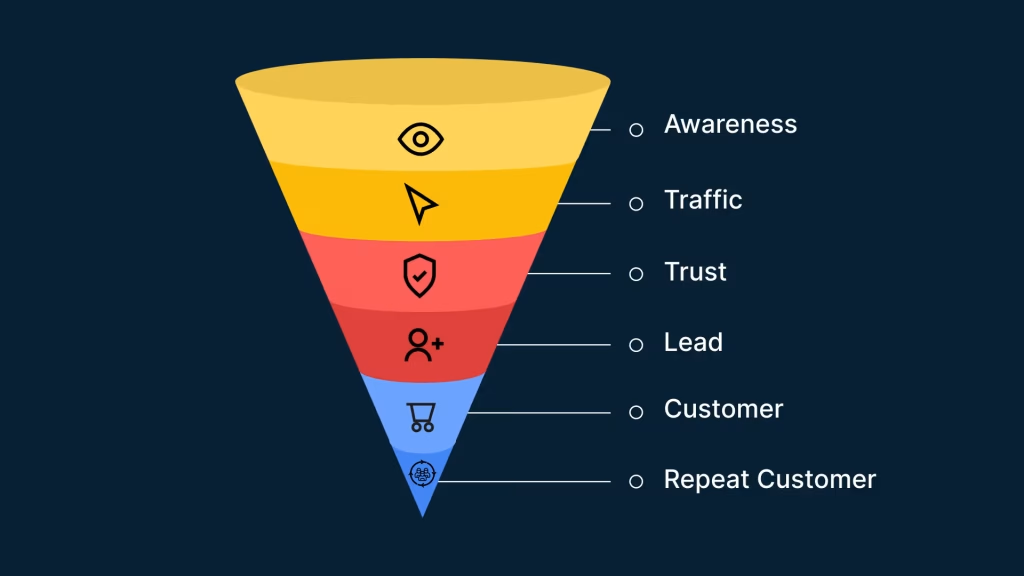
A slow website breaks the Trust stage. A missing Google Business Profile breaks Awareness and Traffic together. Most marketing failures trace back to one broken stage, not the whole funnel.
SEO Services for Small Businesses: Cost and Delivery
SEO services for small businesses usually cost far less than most owners expect going in. Understanding the real range prevents both overpaying and underinvesting.
- Typical retainer: Small business SEO retainers run $500 to $5,000 per month, per Clutch’s 2026 pricing data.
- Agency hourly rate: Digital marketing agencies typically charge $100 to $149 per hour, per Clutch data. Rates vary by scope, region, and agency size.
- Local pack traffic: Map pack businesses get 126 percent more traffic than lower ranked ones, per Semrush.
Price alone does not predict results. A $500 retainer with a clear local focus can outperform a $5,000 retainer without one.
| Monthly Budget | Recommended Focus |
| Under $500 | Google Business Profile plus basic content |
| $500 to $1,500 | Local SEO |
| $1,500 to $3,000 | SEO plus conversion rate optimization |
| $3,000 and above | Full multi-channel strategy |
How Does This Play Out?
A business with a $1,200 monthly budget spreads it across five platforms and sees no traction. Redirecting the full budget to local SEO alone produces steady leads within a quarter.
Which Digital Marketing Services Fix Actually Solves Your Problem?
The obvious fix is often the wrong one. This table maps common symptoms to the mistake most owners make and the fix that actually works.
| Problem | Common Mistake | Better Fix |
| No traffic at all | Buy more ads | Check indexing and technical SEO first |
| Traffic but few enquiries | Publish more blog posts | Improve the conversion path |
| High bounce rate | Add more SEO content | Fix page speed first |
Decision Tree: What Should You Do First?
Use this simple if-then guide to pick a starting point. Match your current symptom to the row below.
| If Your Business Has… | Then Start With… |
| No traffic at all | SEO fundamentals and indexing |
| Traffic but few leads | Website and conversion optimization |
| A seasonal offer or launch | Paid ads (PPC) |
| Repeat customers already | Email marketing |
The 6-Step Process to Fix Small Business Digital Marketing
Follow these six steps in order. Skipping ahead to paid ads before Step 2 is the most common reason budgets get wasted.
Step 1: Diagnose the Real Problem First
Check whether the real issue is traffic, speed, conversion, or visibility. Each problem needs a different fix, and guessing wastes the budget fast.
Step 2: Fix Your Technical Foundation
Resolve site speed and mobile usability before driving any new traffic. A website too slow to load undermines every other channel you invest in.
Step 3: Build Search and Local Visibility
Set up a Google Business Profile and build pages for each core service. This single step often closes the gap most small businesses miss entirely.
Why We Recommend This: Google Business Profile costs nothing to set up. It puts a business in Maps, the local pack, and branded search at once.
Step 4: Choose One Channel and Commit
Pick either SEO or paid ads first instead of spreading budget thin. One channel done well beats five channels done poorly.
Which Service Should You Start With?
| If You Are… | Start With |
| A local storefront or service business | Google Business Profile and local SEO |
| Launching something and need traffic fast | Paid ads (PPC) |
| Getting traffic but few conversions | Website and UX audit |
| An established brand building authority | Content plus SEO |
Step 5: Set a Realistic Budget
Budget close to the SBA’s recommended 7 to 8 percent of gross revenue. Deloitte’s CMO Survey puts the broader market average nearer 10.1 percent.
Budget benchmark: The SBA recommends 7 to 8 percent of gross revenue for healthy small businesses.
Step 6: Track Results and Give It Time
Review traffic, leads, and conversion data every month, not every week. SEO and content marketing compound value over three to six months.
Best for: Catching what is working before pulling the budget from a channel too early.
The Growth Readiness Score
Idea Fueled built this framework to check if a business is ready to scale ad spend. Score your site on these four points first.
Score your business on these four points:
- Site speed: Does your site load in under 3 seconds on mobile?
- Search visibility: Do you rank on page one for your business name and main service?
- Conversion clarity: Can a visitor find your contact info or offer in 10 seconds?
- Publishing consistency: Have you published new content in the last 90 days?
Verdict:
- 3 to 4 points: You are ready to scale ad spend with confidence.
- 1 to 2 points: Fix foundations before adding more budget.
- 0 points: Pause ad spend and fix the site first.
The IDEA Framework
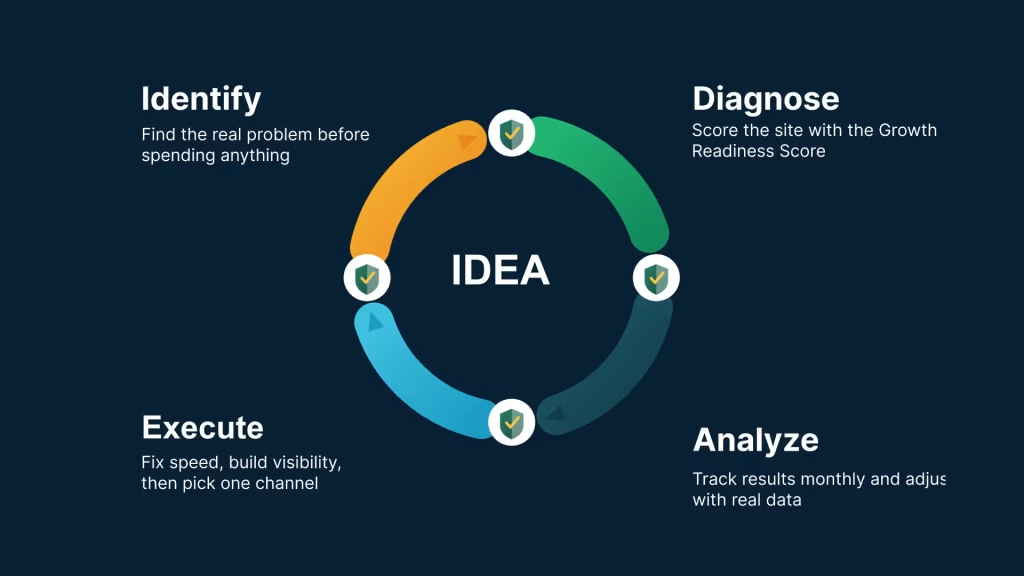
The steps and score above fit inside one larger system. Idea Fueled calls it the IDEA Framework, and it applies to nearly any small business marketing decision.
The four stages of the IDEA Framework:
| Letter | Stage | What Happens Here |
| I | Identify | Find the real problem before spending anything |
| D | Diagnose | Score the site with the Growth Readiness Score |
| E | Execute | Fix speed, build visibility, then pick one channel |
| A | Analyze | Track results monthly and adjust with real data |
Mistakes That Sink Small Business Marketing
These five mistakes explain most cases of marketing that never delivers. Fixing them costs less than most small businesses owners expect.
1. Running Ads to a Slow or Broken Website: Paid traffic hitting a slow page loses value within seconds. Fix the destination before buying more clicks to send there.
2. Chasing Every Platform at Once: Spreading budget across five channels rarely beats one channel done well. Pick one, prove it works, then expand.
3. Ignoring Google Business Profile: This free listing drives real local traffic and calls. Skipping it wastes the highest ROI channel available to most small businesses.
4. Treating SEO as a One-Time Project: Search rankings fade without ongoing work. SEO needs regular content and maintenance, not a single setup project.
5. Judging Results After Only a Few Weeks: Most SEO and content work compounds over three to six months. Pulling budget early cuts off results right before they show up.
Digital Marketing by Business Type
Different businesses need different channel priorities. This table shows where most industries should focus first.
| Business Type | Primary Channel Focus |
| Restaurant | Local SEO, Google Business Profile, social proof |
| Dentist or medical practice | Local SEO, reputation management, targeted ads |
| Law firm | Content marketing, SEO for high-value keywords |
| Manufacturer | Technical SEO, trade-focused content |
| SaaS company | Content marketing, paid ads, email nurture |
| Construction company | Local SEO, visual proof, reviews |
Common Objections about Digital Marketing Services, Answered
These questions come up in almost every first conversation about marketing budget. Here are direct answers to each.
- What if I only have $500 a month? Start with Google Business Profile and focused content. Small budgets still help with the right focus.
- What if I don’t have time to manage this? A freelancer or agency retainer can execute while you approve direction. You do not need to run it yourself.
- What if SEO doesn’t work for my industry? SEO works differently by industry, but most businesses still benefit from local visibility. Results vary by competition, not industry alone.
- What if I already hired an agency and nothing changed? Ask for a technical audit before switching agencies. The website itself may be the real problem.
- What if I already run ads and still see no results? Check where those ads send traffic. A slow or unclear page defeats even well-targeted ads.
When Not to Hire a Digital Marketing Agency?
Marketing spend fails fastest when the business itself is not ready yet. Hold off on hiring if any of these apply.
Wait before hiring if…
- You still do not know your target customer
- Your product or service is not validated with real customers
- Your website is not finished or ready for traffic
- You cannot handle customer enquiries if volume increases
| Don’t Pay an Agency Until You Know You’re Ready The wrong time to hire a marketing agency is when you’re still guessing what’s holding your business back. Instead of signing a long-term contract, start with an independent marketing assessment. If we believe you’re better off waiting, we’ll tell you. CTA: Book a Free Strategy Assessment |
Common Digital Marketing Myths That Cost Small Businesses Money
Many small businesses delay growth because they follow outdated marketing advice. Here are some of the biggest myths and what the data actually shows.
| Myth | Reality | What You Should Do Instead |
| SEO works within two weeks. | SEO typically takes 3 to 6 months to show meaningful results, depending on your industry and competition. | Set realistic expectations and track monthly progress instead of weekly rankings. |
| Running ads fixes every marketing problem. | Ads send more visitors to your website, but they cannot fix a slow website or poor conversion rate. | Improve your website experience before increasing ad spend. |
| Posting content every day guarantees rankings. | Google rewards content that is useful, relevant, and authoritative, not simply frequent. | Publish fewer, higher-quality articles that answer customer questions thoroughly. |
| More website traffic always means more customers. | Traffic without conversions rarely grows a business. Qualified visitors matter more than total visitors. | Measure enquiries, phone calls, and sales alongside website traffic. |
| Every business needs every marketing channel. | Most small businesses grow faster by mastering one or two channels before expanding. | Focus on the channels your customers actually use instead of trying to be everywhere. |
| Ranking #1 on Google guarantees success. | Visibility is only part of the equation. Your website still needs to build trust and convert visitors. | Improve your website’s content, user experience, and calls to action after earning rankings. |
Our Expert Insight
At Idea Fueled, we’ve found that most businesses struggle because they solve the wrong problem first.
For example, many businesses invest in Google Ads when their website loads slowly, has unclear messaging, or makes it difficult for visitors to contact them. Fixing those issues often delivers better results than increasing the advertising budget.
The most effective marketing strategy is about identifying the biggest growth bottleneck and solving it first.
~Esha Mohindru, CEO & Founder, Idea Fueled
Bonus: Key Terms, Defined
These terms come up constantly when evaluating digital marketing services. Use this glossary to read proposals with more confidence.
- Google Business Profile: A free Google listing showing your business in Maps and local search results.
- Local Pack: The map and three-listing block Google shows for searches with local intent.
- Zero-Click Search: A search where the user gets an answer without clicking any website result.
- Conversion Rate: The percentage of visitors who complete a desired action, like a purchase or form fill.
- Core Web Vitals: Google’s metrics for measuring real world page speed and user experience.
- Retainer: A fixed monthly fee paid to an agency for an ongoing set of services.
Conclusion
The businesses that grow consistently never rely on guesswork. They identify what’s limiting their growth, fix the fundamentals, and invest in the marketing channels that support their goals.
If your website loads quickly, ranks for the right searches, and guides visitors toward taking action, every marketing effort becomes more effective. If you invest in SEO, paid advertising, content marketing, or local SEO, success comes from following a clear strategy backed by data.
The right digital marketing services help you improve visibility, attract qualified leads, and turn more visitors into customers. Review where your business stands today, prioritise the changes that will have the biggest impact, and build a marketing strategy that delivers sustainable growth for the long term.
What You Should Do Instantly?
Reading this is useful, but action is what actually changes results. Start with these four checks before touching your budget.
Four checks to run first:
- Test your website speed on a real mobile connection
- Check whether your Google Business Profile is claimed and complete
- Search your own primary keyword and see where you rank
- Ask one recent customer how they actually found you
| Not sure if it’s your website, your SEO, or your ad spend? Get a free growth audit scoring your site speed, visibility, and conversion path in 48 hours. CTA: Fill The Form Now |
Frequently Asked Questions (FAQs)
1. What are digital marketing services, and which ones does my small business need?
Digital marketing services include SEO, paid ads, content, social media, email, and web design. Most small businesses need a fast website, local SEO, and one paid channel first.
2. Why is my website not getting traffic even though it looks good?
A good looking site can still rank poorly if it lacks SEO fundamentals. 65 percent of Google searches now end without a click, per Semrush and SparkToro data.
3. How do I know if my website is too slow to load?
If your mobile site takes more than three seconds to load, you are losing visitors. Think with Google found 53 percent of mobile visits abandon pages past that mark.
4. Why does digital marketing feel like it’s not working for my small business?
It usually means budget, timeline, or channel choice does not match the goal. Judging SEO after a few weeks is the most common reason it feels broken.
5. How much do SEO services for small businesses cost?
Most small business SEO retainers run $500 to $5,000 per month, per Clutch 2026 pricing data. Local SEO packages often sit at the lower end of that range.
6. How long does SEO take to show results?
Most small businesses see meaningful movement between three and six months. Competitive industries and new websites often take longer to rank.
7. Is paid advertising better than SEO for a new small business?
Paid ads deliver traffic faster, while SEO compounds value over time. Many small businesses run both together once the website itself is ready.
8. Do I need a new website before I start marketing?
Not always, but the site must load fast and show a clear next step. Sending paid traffic to a slow or confusing site wastes most of the budget.
9. What is a Google Business Profile, and do I really need one?
It is a free local listing that appears in Google Maps and local search. Only 35 percent of small businesses have one set up, per BrightLocal’s SMB Marketing Report.
10. How much should a small business spend on digital marketing?
The Small Business Administration recommends 7 to 8 percent of gross revenue. Deloitte’s CMO Survey puts the broader average closer to 10.1 percent.
11. Can I do digital marketing myself instead of hiring an agency?
Yes, especially early on with Google Business Profile and basic SEO. Paid ads and technical SEO usually benefit from outside expertise once the budget grows.
12. What is the Growth Readiness Score, and how does it work?
It scores your site on speed, search visibility, conversion clarity, and publishing consistency. A score of three or four out of four means you are ready to scale spend.
13. What’s the biggest mistake small businesses make with digital marketing?
Running paid ads to a slow or unclear website wastes the most budget. Fixing the destination before buying traffic almost always pays off first.
14. Should I fix my website speed before running ads?
Yes. Think with Google found 53 percent of mobile visits abandon pages past 3 seconds. Fixing speed first protects every dollar spent on traffic afterward.