

Search engines have changed. User behavior has changed. Content production has exploded thanks to AI. Yet one thing hasn’t moved an inch, and that is on page SEO still determines whether a page earns visibility or gets ignored.
Google has been unusually clear about this in recent updates. Its core and spam updates repeatedly emphasize helpful, people-first content and actively demote pages created primarily to game rankings. In easy words, pages that lack clarity, intent alignment, and structure quietly lose ground, no matter how many keywords or backlinks they have.
This matters even more now because search itself is no longer just ten blue links. Featured snippets, People Also Ask boxes, rich results, and AI-powered answers now dominate visibility. If your page is not clearly structured, contextually strong, and technically sound, it doesn’t qualify to be surfaced, summarized, or trusted.
That’s where on page SEO comes in. Not as a checklist. Not as a keyword placement arena. But as the system that helps search engines and users understand exactly:
What is a page about?
Who is it for?
Whether it deserves attention?
In 2026, Google won’t struggle to crawl pages. It struggles to choose between millions of similar ones. Pages that communicate clearly win that choice. So, continue reading, because this is not just another on page SEO guide.
A Key Insight That Changes How On-Page SEO Works
The current data paints a blunt picture. Consider this:
- According to Statista’s 2025 report, mobile devices now account for roughly 62 percent of all web traffic, which is why Google uses mobile-first indexing as the default.
- Only about 32 percent of websites currently pass all Core Web Vitals benchmarks, meaning most pages fail basic experience standards before content quality is even considered.
- According to the Rankability 2025 research report, top-ranking pages average a keyword density of just 0.04 percent, clearing that keyword stuffing was never a ranking lever and not ever will be. Context and intent is what’s most important.
This guide breaks down modern on-page SEO exactly as it works today, backed entirely by current research. No outdated tricks. Just a clear, data-backed understanding of how on page SEO actually works in 2026, and why getting it right is still the foundation of organic growth.
What Is On-Page SEO?

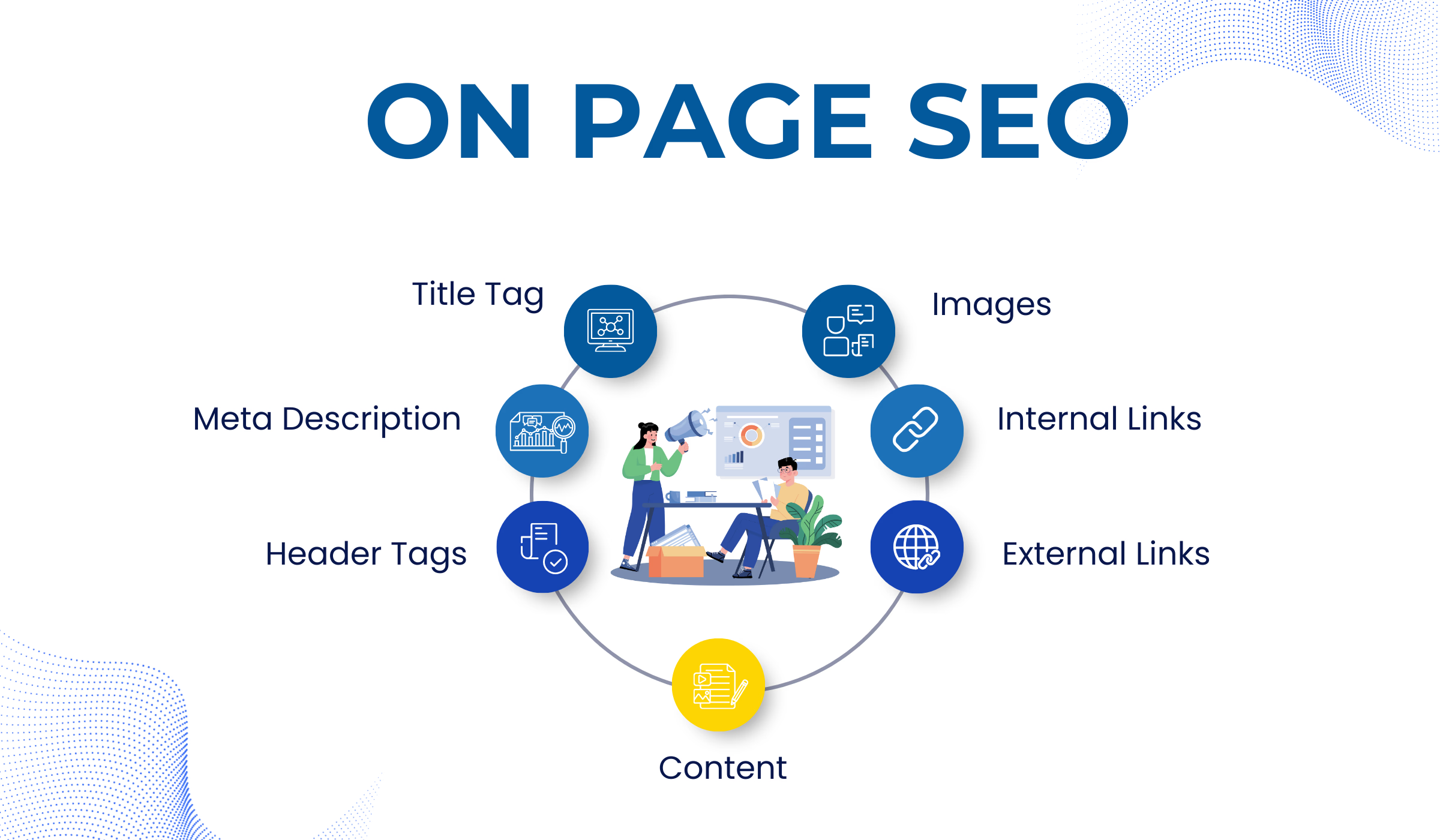
On-page SEO is the practice of optimizing individual web pages so search engines and users can clearly understand what the page is about, who it is for, and when it should appear in search results. At its core, on-page SEO focuses on elements within your control on a single page, including:
- Content and its relevance to search intent
- Keyword usage and semantic context
- Page structure through headings and layout
- Internal linking and contextual signals
- Media optimization and accessibility
- User experience signals like speed, readability, and mobile usability
In simple words, if it lives on the page and influences understanding or experience, it falls under on-page SEO.
What On-Page SEO Is Not?
This is where most execution goes wrong. On page SEO is not:
- backlink building
- domain authority manipulation
- server configuration or crawl budget tuning
- technical fixes like XML sitemaps or robots.txt
- publishing more content just to look active
Those belong to off-page SEO and technical SEO. They matter, but they solve different problems. But on-page SEO answers one fundamental question: “Does this page deserve to rank for this query?” If the answer is unclear, no amount of authority or backlinks will save it long term.
Why Is On-Page SEO Still the Foundation?
Google’s recent behavior makes this obvious.
The search engine no longer struggles to discover pages. It struggles to differentiate between similar ones. Millions of pages target the same keywords, follow the same checklists, and say the same things in slightly different words. That’s why Google leans heavily on:
- intent matching
- content depth
- contextual clarity
- experience signals
And all of those are decided at the page level, not the domain level. This also explains why:
- Pages with strong backlinks still fail to rank
- Technically perfect sites underperform
- Thin but optimized content quietly drops after core updates
On-page SEO is where relevance is established, and trust begins.
How Google Uses On-Page Signals in 2026?
Modern algorithms evaluate pages holistically. They don’t isolate keywords or headings in a vacuum. Instead, Google looks at:
- whether the content answers the query completely
- whether headings reflect logical topic progression
- whether internal links reinforce topical context
- whether the page loads fast and behaves well on mobile
- whether users engage or bounce
This aligns with what the data already shows:
- Mobile-first indexing is now standard, driven by mobile traffic crossing 62 percent.
- Pages that fail experience benchmarks are filtered out early, with only 32 percent of sites passing Core Web Vitals.
- Keyword repetition has almost no influence, with top pages averaging 0.04 percent keyword density.
A Better Way to Think About On-Page SEO
Forget optimization for a moment. Think of on page SEO as page communication. A well-optimized page:
- communicates intent instantly
- guides the reader without friction
- removes ambiguity for search engines
- earns trust through structure, depth, and experience
A poorly optimized page confuses everyone involved. Users hesitate. Crawlers misinterpret. Rankings slip. That’s why on-page SEO is not about adding elements. It’s about aligning them.
How Google Actually Understands and Evaluates a Page in 2026?
Google doesn’t read pages like humans do. It interprets context, connects signals, and predicts user satisfaction. Crawling and indexing are largely solved problems. In 2026, Google’s real challenge is deciding which page deserves to rank among millions targeting the same query.
1. Context Beats Keywords
Modern algorithms no longer rely on exact keyword matching. Instead, Google builds contextual understanding by analyzing:
- the main topic of the page
- supporting subtopics
- semantic relationships between terms
- how headings and sections connect
- internal links that reinforce meaning
This shift explains why keyword density has lost relevance. Top-ranking pages average just 0.04 percent keyword density, proving repetition is not a ranking lever. Clear topic coverage is.
2. Intent Matching Is the First Filter
Before authority or backlinks are considered, Google checks search intent alignment. Every query implies intent, whether informational, commercial, or transactional. Pages that don’t match the dominant intent are filtered out early.
A detailed guide rarely ranks for a purchase-driven query. A thin product page won’t rank for research-heavy searches. On-page SEO exists to make intent unmistakable through content type, structure, and depth.
3. Structure Helps Google Predict Satisfaction
Google evaluates how content is organized, not just what it says. Clear heading hierarchies and logical sections help search engines determine whether a page can:
- power featured snippets
- answer People Also Ask questions
- satisfy users quickly
Pages with poor structure struggle, even if they are technically optimized.
4. Experience Signals Decide Visibility
Content quality alone isn’t enough. Google also measures page experience through Core Web Vitals, mobile usability, loading speed, and visual stability.
With only 32 percent of websites passing Core Web Vitals and mobile accounting for 62 percent of web traffic, experience has become a hard filter. Pages that frustrate users, especially on mobile, rarely earn consistent visibility.
5. How Ranking Decisions Actually Happen
On-page SEO influences every layer. Not through tricks, but by removing ambiguity for both users and search engines. In practice, Google evaluates pages in layers:
- Does the page match intent?
- Is the topic clearly understood?
- Can the page satisfy users quickly?
- Is the experience acceptable on mobile?
- Does the source appear trustworthy?
How to Improve Keyword Strategy for On-Page SEO?
Keyword strategy in modern on page SEO is not about repetition. It is about classification, intent alignment, and contextual confirmation. Google no longer needs keywords to understand language. It uses them to confirm meaning, not discover it.
1. Why Keyword Placement Matters?
Certain placements still carry weight because they establish context early in the evaluation process. Primary keywords should appear naturally in:
- the title tag
- the H1 heading
- the first 100 words of content
- key H2 headings where they align with section intent
These placements help Google rapidly classify the page’s primary topic. After that point, repetition adds diminishing returns. This is supported by ranking data showing that top-performing pages average just 0.04 percent keyword density. Pages do not rank because they repeat terms. They rank because they explain topics clearly.
2. Exact Match vs Close Variants
Exact match keywords still help establish relevance, but they are no longer mandatory throughout the page. Google actively evaluates:
- close variants
- synonyms
- phrase-level relationships
- contextual usage
A page targeting on-page seo does not need to repeat that phrase excessively. Instead, it should naturally reference related concepts such as search intent, heading structure, internal linking, page speed, mobile optimization, and structured data. These terms act as semantic confirmation signals.
3. Why Keyword Density Is a Dead Metric
Keyword density survived for years because it was easy to measure, not because it worked. Modern algorithms prioritize:
- semantic relevance
- topical depth
- concept relationships
Over-optimizing for density introduces noise and harms readability. Google’s systems now treat forced repetition as a quality risk, not a ranking advantage.
4. Search Intent Defines Keyword Value
Every keyword carries intent, and intent mismatch is the fastest way to lose rankings. Intent typically falls into four categories:
- informational
- commercial
- transactional
- navigational
Blogs primarily target informational intent. SaaS pages often sit between informational and commercial intent. E-commerce pages are heavily transactional. If the content format does not match the dominant intent, Google filters the page out early. This happens before authority or backlinks are considered. On-page SEO works when keyword selection, content depth, and page format all align with intent.
5. Semantic Keywords, NLP, and Topic Expansion
Google’s query fan-out behavior favors pages that address:
- the main question
- related sub-questions
- supporting concepts
This is why pages that answer multiple related queries often win People Also Ask placements. Semantic keywords and NLP-style phrasing do not rank on their own. They help Google confirm that a page understands the topic holistically. Keyword strategy succeeds when relevance is obvious without repetition.
How To Show Up Featured Snippets and People Also Ask?
Featured snippets and People Also Ask (PAA) boxes are no longer optional visibility opportunities. They dominate modern SERPs. Importantly, PAA visibility does not require ranking first. Google often pulls answers from pages outside the top position, multiplying exposure for well-structured content.
1. How Google Extracts Answers
Google favors pages that:
- pose questions as headings
- deliver direct answers immediately below
- keep answers concise and scannable
The ideal answer length for paragraph-style snippets is 30–60 words. For list-style queries, bullet or numbered lists perform best.
2. Why Structure Matters More Than Authority
Snippet extraction depends heavily on:
- heading clarity
- answer placement
- content structure
Pages with clear sections and clean formatting are easier for Google to summarize. Authority helps, but structure enables extraction.
3. People Also Ask as a Visibility Multiplier
Each PAA placement increases SERP presence without competing for traditional rankings. Research shows:
- approximately 63 percent of PAA interactions occur on mobile devices
- PAA boxes update dynamically based on user behavior
Pages that consistently answer related questions strengthen topical authority and earn repeat inclusion across related searches.
4. Speed of Answer Rendering Matters
Google does not evaluate only overall page speed. It evaluates how fast the answer section renders. Pages that surface answers in under roughly one second see up to 70 percent higher engagement, especially on mobile. This makes Core Web Vitals and above-the-fold optimization critical for snippet performance.
How to Improve Core Web Vitals?
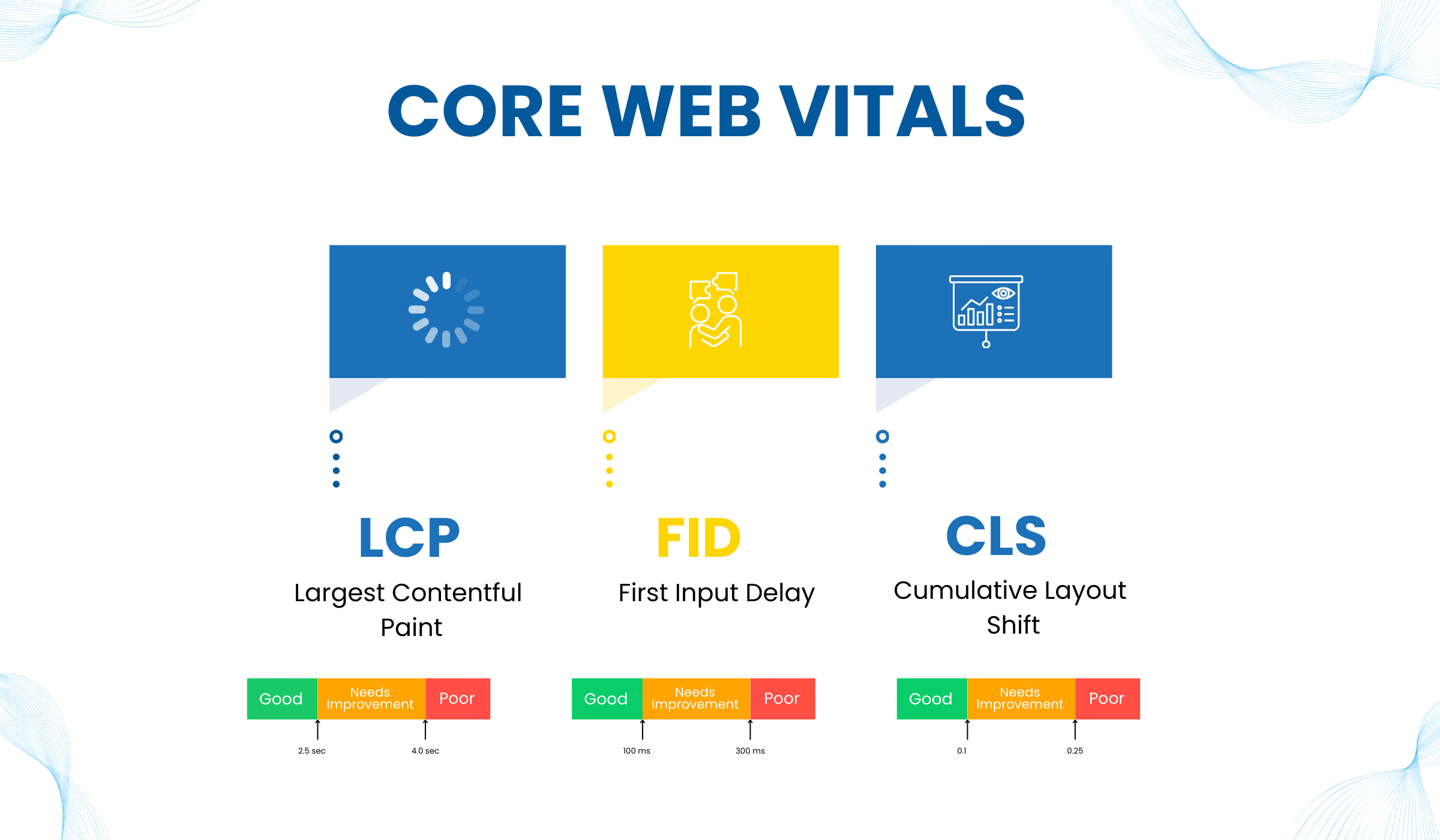
Core Web Vitals are not ranking multipliers. They are eligibility filters. Google evaluates:
- Largest Contentful Paint (LCP)
- First Input Delay (FID)
- Cumulative Layout Shift (CLS)
Only about 32 percent of websites currently pass all Core Web Vitals benchmarks. Pages that fail are often filtered out before content quality is fully evaluated.
1. Why CWV Failures Block Visibility
Poor performance signals frustration:
- slow loading
- unstable layouts
- delayed interaction
Google has little incentive to surface pages that degrade user experience, especially on mobile.
2. CWV and Snippet Eligibility
Performance directly affects:
- featured snippet extraction
- PAA answer rendering
- mobile SERP inclusion
Even high-quality content struggles to win enhanced visibility if experience thresholds are not met. Core Web Vitals do not help pages rank higher. They help pages avoid being ignored.
How to Ensure Structured Data, Schema, and Answer Engine Optimization?
Structured data does not increase rankings directly. It increases eligibility. Schema helps search engines:
- Interpret content type
- Understand relationships
- Extract answers confidently
This is where SEO and AEO intersect.
1. Schema Types That Support On-Page SEO
The most impactful schema types include:
- Article schema for blogs
- Product schema for ecommerce pages
- FAQ schema for question-based content
- Breadcrumb schema for site hierarchy
Product schema enables rich results such as pricing, availability, and reviews. The FAQ schema supports answer extraction. Breadcrumb schema improves SERP comprehension and reinforces structure.
2. Why Schema Matters in AI-Driven Search
As search engines shift toward answer engines, structured data provides clarity. Schema does not tell Google what to rank. It tells Google what the content is, making it easier to summarize, surface, and trust.
How to Optimize URL Structure and Site Hierarchy?
URLs are not just technical identifiers. They are context signals. Clean URLs improve: click-through rate, crawl efficiency, and content understanding.
1. Best Practices for URL Structure
Effective URLs are:
- short and descriptive
- hyphen-separated
- free of unnecessary parameters
- aligned with page intent
Including one primary keyword is helpful if it fits naturally. Overloading URLs with keywords adds no value.
2. Canonicalization and Duplicate Control
Duplicate URLs dilute signals. Canonical tags consolidate ranking signals and prevent confusion, especially in:
- ecommerce product variants
- filtered category pages
- pagination paths
Without proper canonicalization, Google splits authority across similar URLs.
3. Hierarchy, Breadcrumbs, and Context
Logical hierarchy helps Google understand topical relationships. Breadcrumb schema reinforces:
- page position within the site
- category structure
- topical clusters
This clarity improves crawl efficiency and SERP presentation, particularly for large SaaS and ecommerce sites.
How to Optimize Title Tags and Meta Descriptions?
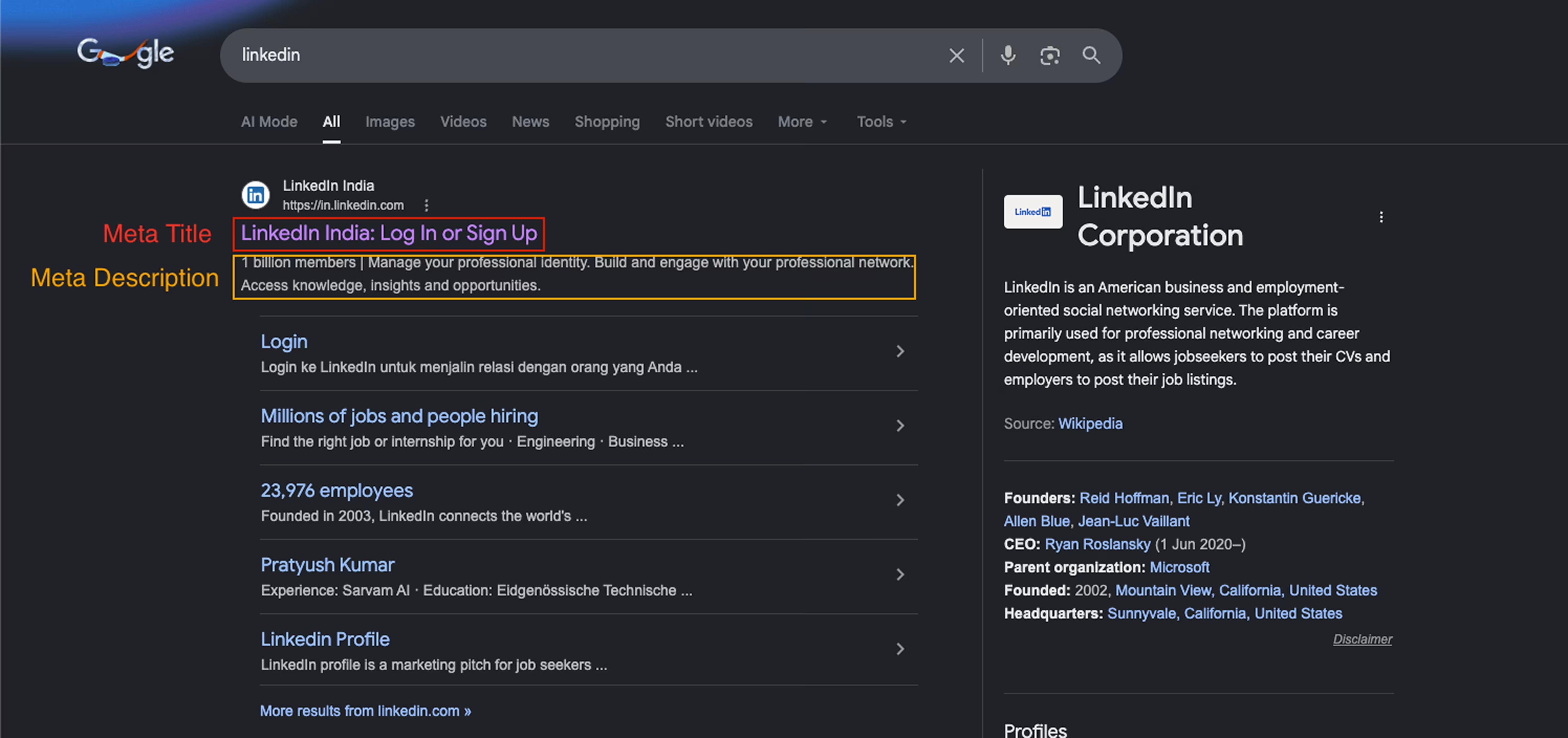
If on page SEO determines whether a page qualifies to rank, title tags and meta descriptions determine whether anyone chooses it. In modern SERPs, ranking is only half the battle. Ads, featured snippets, People Also Ask boxes, product cards, and AI summaries all compete for attention. A technically sound page that fails to earn clicks might as well be invisible.
1. Why Title Tags Still Carry Disproportionate Weight?
Title tags remain one of the strongest on-page SEO signals because they serve two functions at once: They tell Google what the page is primarily about. They tell users whether the result is worth clicking. Google uses title tags to classify pages quickly, especially when multiple results target similar topics. This is why clarity beats creativity. Effective title tags:
- stay within 50–60 characters to avoid truncation
- include the primary keyword naturally
- place the most important terms toward the beginning
- clearly reflect search intent
Modifiers such as best, guide, 2026, complete, or comparison help align the title with how users actually search. These are not gimmicks. They are intent signals. A vague title forces Google to rely on surrounding context. A clear title removes uncertainty.
2. Exact Match vs Intent Match in Titles
Exact match keywords still help establish relevance, but intent match matters more.
- A page targeting informational queries should sound informational.
- A page targeting commercial queries should sound comparative or solution-oriented.
- A transactional page should sound decisive.
When titles mismatch intent, click-through rates drop. When click-through rates drop, visibility follows. On page SEO works best when titles promise exactly what the page delivers.
3. Meta Descriptions: Not a Ranking Signal, Still a Performance Signal
Meta descriptions do not directly influence rankings. That much is settled. What they influence is click-through rate, which indirectly affects how a page performs in competitive SERPs. A strong meta description:
- stays within 100–160 characters
- summarizes the page accurately
- aligns with the dominant intent
- sets clear expectations
Descriptions that oversell or mislead increase bounce rates. Bounce rates signal dissatisfaction. Google notices patterns of dissatisfaction. In other words, persuasive but inaccurate descriptions hurt more than they help.
4. Why Google Rewrites Meta Descriptions?
Google often rewrites meta descriptions when:
- The description does not match the query intent
- It is too generic
- It repeats the title
- It lacks contextual relevance
While rewrites are unavoidable, pages with clear structure, strong headings, and aligned descriptions are rewritten less frequently because Google trusts the provided context.
Meta descriptions are not about controlling SERPs. They are about reducing ambiguity.
5. Titles, Descriptions, and AEO
As search moves toward answer-driven results, titles and descriptions also influence:
- snippet eligibility
- PAA inclusion
- AI summary sourcing
Pages with precise titles and clean descriptions are easier for search engines to classify and summarize. This directly supports Answer Engine Optimization.
6. Why This Section Matters More Than People Admit
Many pages fail not because they lack authority, backlinks, or content quality. They fail because:
- The title is vague
- The description is misleading
- Users skip past them
On page SEO does not end at ranking. It ends when the right user clicks and stays.
How and Why Improve Heading Structure and Content Hierarchy?
Headings are not there to make content “look nice.” In on page SEO, headings are organizational signals. They tell search engines how ideas relate to each other and tell users whether a page is worth their time or not. When headings are weak, everything else struggles. Even good content.
1. How Google Uses Headings to Understand a Page?
Google uses headings to:
- Identify the primary topic of the page
- Understand how that topic is broken into subtopics
- Locate answers for featured snippets and People Also Ask
- Evaluate whether the content flows logically
A clear hierarchy reduces ambiguity, and ambiguity is the enemy of rankings. This is why pages with clean heading structures are disproportionately represented in snippets and PAA boxes. They are simply easier to extract answers from.
2. Why Proper Heading Hierarchy Matters?
A well-structured page follows a simple hierarchy:
- One H1 that defines the main topic
- H2s for major sections
- H3s for supporting subpoints
This hierarchy helps Google map the page’s intent and helps readers scan quickly.
Multiple H1s, skipped heading levels, or decorative headings confuse crawlers and disrupt reading flow. The content might still be indexed, but its meaning becomes diluted.
3. Headings as Intent Signals
Headings do more than organize content. They signal intent alignment. For example:
- Question-style headings indicate informational intent
- Comparison-style headings suggest commercial intent
- Action-oriented headings align with transactional intent
When headings clearly reflect intent, Google can confidently match the page to relevant queries. When they don’t, the page competes poorly, even if the content itself is strong.
4. Headings and Featured Snippet Eligibility
Featured snippets rely heavily on headings. Pages are more likely to win snippets when:
- Questions are used as H2 or H3 headings
- Concise answers appear immediately after
- Sections are clearly separated
This structure allows Google to extract answers cleanly, especially within the 30–60 word range that performs best for paragraph snippets.
5. Readability Is a Ranking Multiplier
Headings also influence user behavior. Clear sections:
- Reduce bounce rates
- Increase time on page
- Improve scroll depth and dwell time
These behavioral signals reinforce content quality. With mobile driving 62 percent of web traffic, scannability is no longer optional. Poorly structured pages lose readers before content quality has a chance to matter.
6. Common Heading Mistakes That Hurt On-Page SEO
Headings must guide, not confuse. Some of the most damaging mistakes include:
- stuffing keywords into headings unnaturally
- using vague headings that say nothing
- skipping hierarchy levels (H2 straight to H4)
- repeating the same heading structure across every page
7. The Real Role of Headings in On-Page SEO
Think of headings as navigation for meaning. A strong heading structure:
- Clarifies intent
- Reinforces topical authority
- Supports snippet extraction
- Improves user experience
When headings do their job, everything else works harder with less effort.
How to Ensure Content Depth, Topical Authority, and E-E-A-T?
If headings decide whether a page is understood, content depth decides whether it is trusted. In modern on-page SEO, Google is not impressed by surface-level explanations. It rewards pages that demonstrate clear understanding of a topic and satisfy user intent without forcing the reader to keep searching. This is where most content fails. Not because it’s wrong, but because it’s incomplete.
1. Why Thin Content Fails in 2026
Thin content doesn’t fail because it’s short. It fails because it leaves questions unanswered. Google’s recent updates consistently favor pages that:
- Fully address the primary query
- Anticipate follow-up questions
- Reduce the need for users to return to search
With AI-generated content flooding the web, shallow explanations are everywhere. As a result, depth has become a differentiator, not a bonus. Pages that lightly touch a topic without explaining how, why, or when it applies struggle to maintain rankings, especially after core updates.
2. What Content Depth Actually Means?
Depth does not mean padding word count. It means:
- Explaining concepts, not just naming them
- Connecting ideas logically
- Covering both fundamentals and implications
- Addressing edge cases and common confusion
A deep page makes the reader feel informed, not overwhelmed. From Google’s perspective, depth signals topic comprehension. From the user’s perspective, it signals value.
3. Topical Authority Is Built Page by Page
Topical authority is often misunderstood as a domain-wide trait. In reality, it is reinforced at the page level first. Pages build authority when they:
- Answer the main question clearly
- Cover related subtopics naturally
- Align with People Also Ask patterns
- Connect to other relevant internal pages
This is why pages that win multiple PAA placements often outperform competitors with stronger backlink profiles. They signal comprehensive understanding of the topic cluster. Topical authority is not about saying more. It’s about covering what matters.
4. How E-E-A-T Fits Into On-Page SEO
E-E-A-T stands for Experience, Expertise, Authority, and Trust. It is not a direct ranking factor, but it heavily influences how Google evaluates quality. On-page signals that support E-E-A-T include:
- Clear authorship and credentials on content
- Accurate, up-to-date information
- Use of credible data and references
- Transparent brand and contact information
For SaaS and e-commerce websites, E-E-A-T extends to:
- Clear product explanations
- Honest pricing and availability
- Reviews, testimonials, and user feedback
These elements help Google assess whether a page deserves to be trusted, especially for queries that impact decisions or finances.
5. Why Experience Matters More Than Ever
Experience is the most underrated part of E-E-A-T. Pages written by people who understand the subject tend to:
- Explain nuances
- Avoid generic phrasing
- Anticipate real-world questions
This aligns perfectly with Google’s push toward helpful, people-first content. Pages that feel templated or generic may rank briefly, but they rarely hold positions long term.
6. Content Depth Without Clutter
Strong on page SEO balances depth with clarity. That means:
- Breaking content into clear sections
- Using headings to guide readers
- Avoiding filler or repetitive explanations
Depth should reduce confusion, not create it.
How and Why Internal Linking and Site Context Matters?
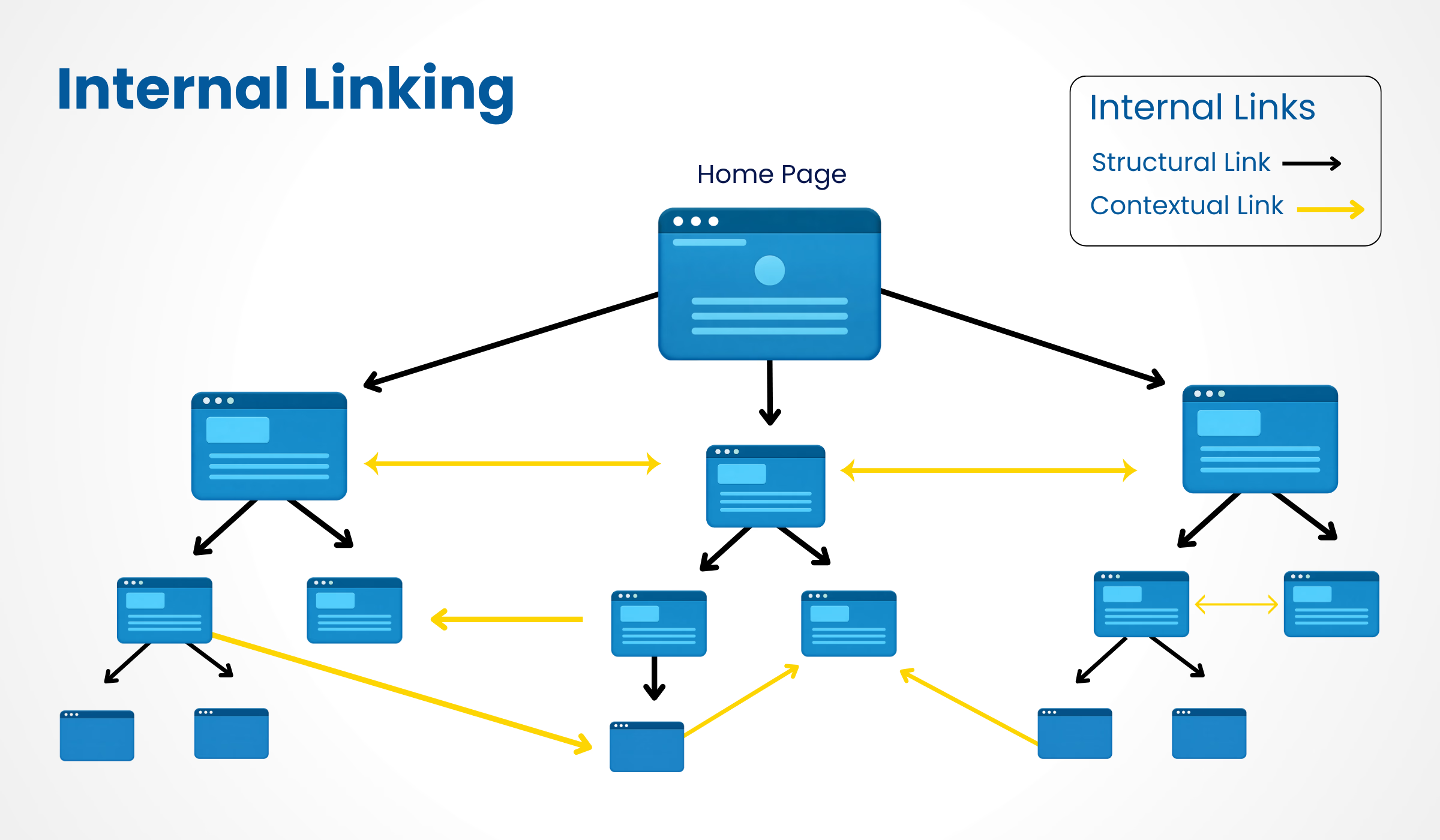
If content depth builds trust on a page, internal linking builds understanding across your site.
In On-page SEO, internal links are not about passing juice. That framing is outdated and honestly lazy. Their real job is to help search engines and users understand how ideas connect.
In simple words, a page in isolation is just content and a page in context is authority.
1. How Google Uses Internal Links?
Google uses internal links to:
- Discover pages
- Understand relationships between topics
- Determine which pages matter most
- Interpret topical clusters
Internal links tell Google which pages support others and which pages represent core ideas. Without them, even strong pages can feel disconnected and weak. This matters more now because Google evaluates topical authority, not just individual keywords. Pages that reinforce each other perform better together.
2. Contextual Links Beat Navigational Links
Not all internal links carry the same weight. Contextual links placed naturally within content:
- Provide semantic signals
- Reinforce topic relevance
- Guide users deeper into related information
Footer links, sidebar links, and menu links help with navigation, but they don’t replace contextual linking within content. A sentence-level link explaining why another page is relevant is far more powerful than a generic menu link.
3. Anchor Text: Say What You Mean
Anchor text is a meaning signal, not a place to stuff keywords. Effective anchor text:
- Describes what the linked page is about
- Fits naturally into the sentence
- Avoids vague phrases like “click here”
When anchor text is descriptive, Google understands the relationship instantly. When it’s generic or forced, that signal weakens.
4. Internal Linking and User Flow
Internal links are also UX tools. They help users:
- Explore related topics
- Move naturally through a learning journey
- Find answers without returning to search
This reduces bounce rates and increases engagement. Those behavioral signals reinforce content quality, especially on mobile, where patience is limited and 62 percent of traffic originates.
5. Funnel-Aware Internal Linking
Strong internal linking aligns with intent. For example:
- Informational blog posts link to deeper guides or relevant SaaS feature pages
- Comparison content links to pricing or demo pages
- E-commerce guides link to category or product pages
This does not make content salesy. It makes it useful. When links reflect user intent, both users and search engines respond positively.
6. Common Internal Linking Mistakes
The most damaging mistakes include:
- Linking excessively without purpose
- Using the same anchor text repeatedly
- Linking unrelated pages just to increase link count
- Ignoring older content when publishing new pages
Internal linking should feel intentional, not automated.
7. Internal Linking as a System, Not a Tactic
Think of internal links as context builders. They:
- Strengthen topical authority
- Help Google map your site
- Turn individual pages into a coherent system
When internal linking is done right, pages stop competing for attention. They support each other.
Why and How to Optimize Image and Media for On-Page SEO

Images and media are not just visual assets. In on page SEO, there are context signals, performance factors, and accessibility requirements rolled into one. When media is handled poorly, even strong content struggles to perform.
1. Why Does Media Optimization Matters More Than It Seems?
Search engines evaluate pages holistically. That includes:
- How fast does the media load?
- How stable the layout feels?
- How accessible content is to all users?
Images often represent the largest files on a page. If they are unoptimized, they directly harm Core Web Vitals, especially Largest Contentful Paint and Cumulative Layout Shift. With only 32 percent of websites passing Core Web Vitals, media optimization is a competitive advantage hiding in plain sight.
2. File Size, Format, and Compression
Large image files slow down pages, particularly on mobile networks. Best practices include:
- Compressing images before upload
- Using modern formats like WebP for high quality and low size
- Avoiding oversized dimensions
These steps reduce load time without sacrificing visual quality. Faster load times improve user experience, which matters more when 62 percent of traffic comes from mobile devices.
3. Image Filenames and Context Signals
Image filenames help search engines understand what an image represents. A descriptive filename provides context before the image is even rendered. Generic names like IMG_2045.jpg add nothing. Clear filenames support topical relevance and improve discoverability in image search. This is a small signal, but on-page SEO is built on cumulative clarity.
4. ALT Text and Accessibility
ALT text serves two critical purposes:
- It makes content accessible to screen readers
- It helps search engines understand image content
Good ALT text:
- Describes the image accurately
- Fits naturally
- Avoids keyword stuffing
ALT text is not a place to force keywords. It is a place to explain the meaning. Accessibility is not optional, and search engines increasingly treat it as a quality signal.
5. Lazy Loading and Rendering Priority
Lazy loading defers non-critical images until they are needed. This improves initial load performance and helps pages surface content faster. However, lazy loading should be used thoughtfully. Critical images, especially those above the fold, should load immediately to avoid hurting perceived performance or snippet eligibility. Remember, Google evaluates how quickly important content appears, not just total page load time.
6. Media and Layout Stability
Unstable layouts frustrate users. Images without defined dimensions cause content to shift as they load, increasing Cumulative Layout Shift. This directly harms Core Web Vitals and user trust. Defining image dimensions prevents layout jumps and creates a smoother experience.
7. Media as a Supporting Signal, Not Decoration
Images and videos should support understanding, not distract from it. Relevant media:
- Reinforces key concepts
- Improves comprehension
- Increases engagement
Irrelevant visuals increase load time without adding value. In on page SEO, everything on the page should justify its presence.
How to Optimize On-Page SEO for Different Use Cases?
| On-Page SEO Element | Blogs | SaaS Websites | Ecommerce Websites |
| Primary Goal | Answer questions, educate, build topical authority | Explain value, remove doubt, drive demos or sign-ups | Drive purchases with clarity and trust |
| Dominant Search Intent | Informational | Informational and Commercial | Transactional |
| Content Depth | Very high. Long-form, explanatory, comprehensive | Moderate to high. Focused on benefits, use cases, differentiation | Focused. Clear descriptions, specs, FAQs, reviews |
| Keyword Strategy | Broad topic coverage, semantic keywords, PAA targeting | Fewer keywords, high intent alignment, clarity over volume | Exact and variant product keywords, category-level intent |
| Heading Structure | Question-based H2s and H3s for snippets and PAA | Benefit-led headings aligned with objections and value | Feature, spec, and benefit-based headings |
| Featured Snippet Focus | High. Paragraphs, lists, definitions | Medium. Comparisons, “what is” and “how it works” | Low to medium. Mostly FAQs and specs |
| People Also Ask Optimization | Critical. Major visibility multiplier | Helpful but secondary | Mostly FAQ-driven |
| Internal Linking Priority | Topic clusters, related guides, pillar pages | Feature pages, use cases, pricing, demos | First category, then product, and then related product flow |
| E-E-A-T Signals | Author bios, credible sources, depth | Brand authority, case studies, testimonials | Reviews, ratings, trust badges, policies |
| Structured Data | Article, FAQ, Breadcrumb | SoftwareApplication, FAQ, Breadcrumb | Product, Review, Offer, Breadcrumb |
| Core Web Vitals Sensitivity | Medium. Depth matters more than speed (to a point) | High. Slow pages kill conversions | Very high. Speed directly impacts revenue |
| Mobile Optimization Priority | Readability and scannability | Speed, clarity, plus frictionless CTAs | Speed, stability, and easy checkout |
| What to Prioritize | Intent coverage, clarity, snippet eligibility | Messaging clarity, trust, conversion flow | Product clarity, trust, structured data |
| What NOT to Obsess Over | Over-optimizing CTAs or selling too early | Ranking for broad informational keywords | Long-form content that delays buying |
The Real Goal of On-page SEO in 2026 and Why Most People Miss it?
After all the tactics, frameworks, and best practices, it’s easy to walk away thinking on-page SEO is about doing things right. But it’s not. The real goal of on page SEO in 2026 is reducing uncertainty. For users. For search engines. For answer systems.
Everything else is secondary.
1. Google’s Core Problem Has Changed
Google no longer struggles to find content. It struggles to decide what to trust and surface. Millions of pages target the same keywords. Many are technically sound. Many are written correctly. But only a small fraction consistently earn visibility.
Why? Because Google optimizes for confidence, not compliance. Confidence that:
- The page matches intent
- The content fully answers the query
- The experience won’t frustrate users
- The source understands the topic
On-page SEO exists to create that confidence.
2. On-Page SEO Is a Clarity System, Not an Optimization Layer
When teams treat on page SEO as just keyword placement, tag optimization, and tool scores, they miss the point. In practice, strong on-page SEO aligns five things perfectly:
- Intent: what the user is actually trying to achieve
- Structure: how information is organized and surfaced
- Content: how completely and clearly the topic is explained
- Experience: how fast, stable, and usable the page feels
- Context: how the page fits into the broader site
When these elements align, rankings follow naturally. When they don’t, optimization simply fails.
3. Why More SEO Is Often the Wrong Move
One of the most counterintuitive lessons from real-world audits is that pages rarely fail because they are under-optimized. They fail because they are overcomplicated. Too many keywords. Too many CTAs. Too many ideas competing on one page.
The best-performing pages usually do less, but do it with intention. They have one job, and everything on the page supports that job. That restraint on too much SEO is the real experience.
4. The Shift From Ranking Pages to Answering Questions
This is 2026, not 2021, this is why search is no longer limited to links. Featured snippets, People Also Ask boxes, and AI-generated answers now decide visibility. Pages are increasingly evaluated on whether they can be summarized accurately, quoted confidently, and extracted without distortion.
This is why structure, clarity, and direct answers matter more than ever. On page SEO in 2026 is as much about being quotable as it is about being crawlable.
5. What Winning Pages Have in Common
Across blogs, SaaS sites, and ecommerce platforms, pages that consistently perform share the same traits:
- They surface the answer early mostly in the first sentence
- They remove friction instead of adding features
- They anticipate confusion and resolve it
- They respect the user’s time
These pages don’t chase algorithms. They align with how algorithms are designed to reward usefulness.
6. The Mental Model That Actually Works
If there’s one way to think about on page SEO going forward, it’s this: Every page is a promise. On-page SEO decides whether that promise is clear, believable, and fulfilled. When the promise is vague, no optimization saves it. When the promise is clear, optimization becomes almost invisible.
How Idea Fueled Helps You Get On-Page SEO Right
Most pages fail because they lack clarity, structure, and intent alignment. At Idea Fueled, we fix on-page SEO at the page level. Not with checklists or plugins, but by rebuilding how pages communicate with users and search engines.
What we focus on:
- Intent-aligned content structure
- Heading and snippet-ready formatting
- Core Web Vitals and mobile performance
- Internal linking and topical context
- Conversion-focused page clarity
The result is pages that rank and hold, instead of spiking and disappearing. If your pages need clarity instead of more SEO noise,Idea Fueled is where you start.
Conclusion
On page SEO works when pages are built with a clear purpose, not when they are over-optimized. Search engines now reward pages that match intent, explain topics clearly, load fast on mobile, and remove friction for users. Keywords, tags, and tools still matter, but only when they support clarity rather than compete with it.
The strongest pages don’t try to rank for everything. They do one job well, answer questions directly, and guide users naturally. That’s what makes them easy for search engines to understand and easy for users to trust. If you treat on-page SEO as a system instead of a checklist, rankings stop feeling unstable. They become a byproduct of doing the fundamentals right, consistently.
At Idea Fueled, we help brands fix on-page SEO at the root, not just the surface. If your pages need clarity, consistency, and results that last, we know where to start.