

Choose WooCommerce for full ownership, deep SEO control, and unlimited customization through a woocommerce developer. Choose Shopify if you want a managed, fast-launch platform with built-in hosting and support.
Choosing between WooCommerce vs Shopify feels overwhelming when you first start. Both platforms power millions of stores worldwide. Both promise an easy path to online sales. Yet they solve different problems for different business owners.
This blog breaks down the real differences without marketing fluff. You will see cost structures, technical control, app ecosystems, and scalability side by side. We have built and migrated stores on both platforms, and this comparison reflects that hands-on experience.
| How we evaluated these platforms: We compared pricing data from official sources, tested core checkout flows on both platforms, and drew on direct client migration projects completed by our team. We avoided affiliate-driven comparison sites and relied on primary documentation wherever possible. |
Key Takeaways
- WooCommerce wins on cost control, content marketing, and full code ownership.
- Shopify wins on launch speed, managed security, and beginner simplicity.
- WordPress powers 43.4% of all websites, giving WooCommerce a massive developer ecosystem.
- Shopify reported $11.55 billion in 2025 revenue, confirming strong merchant trust.
- Your decision should match your team’s technical capacity, not platform popularity.
What Is WooCommerce?
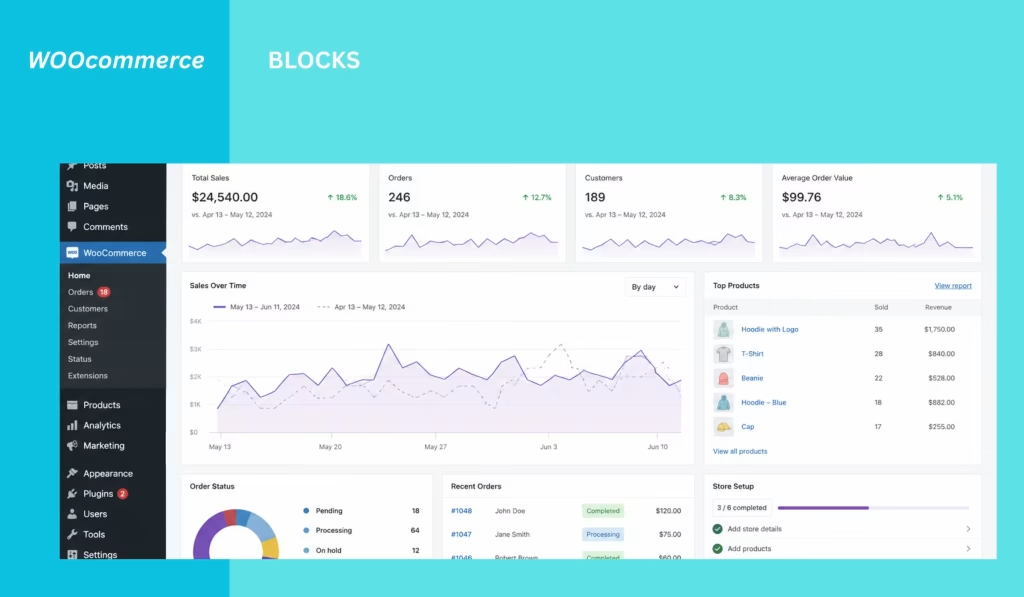
WooCommerce is a free, open-source plugin that turns a WordPress website into a full online store. It runs on your own hosting, so you control every file and setting. WooCommerce.com confirms the plugin remains the most installed ecommerce extension in the WordPress ecosystem.
Because WooCommerce sits on top of WordPress, it inherits the same content strengths. These made WordPress dominant in the first place. You get native blog functionality, flexible page building, and a familiar dashboard. This applies if you have used WordPress before. This combination of commerce and content under one roof is rare among ecommerce platforms.
WordPress itself powers 43.4% of all websites on the internet, according to W3Techs usage data. That massive footprint gives WooCommerce store owners access to thousands of themes, plugins, and freelance talent. This ecosystem depth is why agencies offer dedicated woocommerce development services. Building alone often costs more time than it saves.
What Is Shopify?

Shopify is a fully hosted, software-as-a-service ecommerce platform. You pay a monthly subscription, and Shopify handles servers, security patches, and uptime. You focus on products and marketing instead of infrastructure.
Shopify launched with a simple promise. Anyone should be able to open an online store without hiring a development team. That promise still holds today, supported by guided onboarding, built-in payment processing, and a curated app marketplace. The trade-off is less raw flexibility compared to an open-source system.
W3Techs reports Shopify holds roughly 4.8% of the entire website market. That slice is smaller than WordPress but heavily concentrated in active commerce. Shopify confirmed in its quarterly investor results that the platform generated $11.55 billion in 2025 revenue. This figure reflects strong, sustained merchant growth.
A Real-World Scenario
A client once approached our team running a content-heavy candle brand on Shopify. Blog traffic stalled because URL structures limited keyword targeting. We migrated the store to WooCommerce, rebuilt the content hub, and organic traffic grew within four months. This is not unusual. Stores built around storytelling and SEO often outgrow Shopify’s content limitations eventually.
The reverse happens just as often. A handmade jewelry seller came to us frustrated with constant WooCommerce plugin conflicts and slow page speeds. We migrated the catalog to Shopify, and checkout abandonment dropped immediately.
Managed hosting removed the technical debt that had built up over two years. Both outcomes prove the same point. The right platform depends entirely on your specific operational pain points, not industry trends.
Comparison Table Between WooCommerce and Shopify
| Factor | WooCommerce | Shopify |
| Hosting | Self-hosted, you choose provider | Fully managed by Shopify |
| Upfront Cost | Free plugin, hosting and extensions vary | Monthly subscription starts immediately |
| Customization | Nearly unlimited with code access | Limited by Shopify’s app and theme rules |
| Maintenance | You manage updates and security | Shopify manages updates automatically |
| SEO Control | Deep, native WordPress content tools | Good, but URL and schema control is limited |
| Learning Curve | Moderate to steep without a developer | Beginner-friendly, minimal setup steps |
| Best For | Content-heavy stores, blogs, niche catalogs | Fast launches, dropshipping, scaling brands |
| Developer Need | Often requires a skilled developer | Lower technical barrier to start |
Pricing Breakdown of Both Platforms
WooCommerce itself costs nothing to install. Your real expenses come from hosting, premium themes, and payment processing fees. A basic store can launch for under $200 a year on shared hosting. Enterprise hosting and custom development push costs much higher.
| WooCommerce Cost Component | Typical Range |
| Plugin itself | Free |
| Shared hosting | $5 to $30 per month |
| Managed WooCommerce hosting | $30 to $200 per month |
| Premium theme | $50 to $150 one-time |
| Custom development | Varies by project scope |
Shopify charges a flat monthly fee, which scales with feature access. You also pay transaction fees unless you use Shopify Payments directly.
| Shopify Plan Tier | Typical Monthly Range |
| Basic | Around $29 to $39 |
| Standard or Shopify plan | Around $79 to $105 |
| Advanced | Around $299 to $399 |
| Shopify Plus | Custom enterprise pricing |
Hidden costs catch many first-time merchants off guard. WooCommerce stores often underestimate ongoing maintenance, security monitoring, and plugin renewal fees. Shopify stores often underestimate paid app subscriptions, which can quietly add $100 or more monthly. Always budget for these extras before launch, not after.
Over three years, a mid-sized WooCommerce store typically spends $4,000 to $9,000 total. This covers hosting, themes, and developer support combined. A comparable Shopify store on the Standard plan typically spends $3,000 to $6,000. This figure includes apps and transaction fees. The gap narrows considerably once both stores reach meaningful scale.
Verdict: Which Costs More?
Shopify offers lower upfront complexity and predictable costs, while WooCommerce offers greater long-term cost flexibility.
Market Reach and Adoption
Store count tells part of the adoption story. W3Techs data from January 2026 shows WooCommerce running on 8.7% of all websites. This makes it one of the most widely deployed ecommerce technologies in existence.
Shopify Payments adoption tells the merchant-quality story. Shopify’s own reporting shows 1.89 million merchants actively using Shopify Payments. That figure represents about 90% of eligible stores on the platform. This signals strong trust in Shopify’s native checkout among active sellers.
| “Most clients assume WooCommerce is harder to scale. The real bottleneck is usually hosting choice, not the platform itself. A properly configured WooCommerce store handles enterprise traffic without trouble.” Puneet Chopra, Co-founder & CTO, Idea Fueled |
Customization and Developer Control
WooCommerce gives developers full access to source code, database structure, and server configuration. This openness lets a skilled woocommerce developer build features no plugin marketplace offers. Agencies providing woocommerce development services commonly build custom checkout flows, subscription logic, and multi-vendor marketplaces this way.
Shopify restricts core code access but compensates with a polished app ecosystem. A shopify development agency extends functionality through Shopify’s Liquid templating language and official APIs. Shopify website development projects move fast because pre-built sections speed up the build phase. Drag-and-drop editing lets small teams ship without writing code.
App and Plugin Ecosystem
WooCommerce taps directly into the WordPress plugin directory, packed with free and premium tools. Almost any feature you imagine, from booking calendars to loyalty programs, already exists as a plugin. This breadth gives WooCommerce stores extreme flexibility without custom code in many cases.
Shopify’s app store is smaller but more tightly curated and quality-controlled. Apps integrate through standardized APIs, which reduces conflicts between tools. This trade-off favors stability over raw quantity, a sensible choice for merchants who prioritize reliability.
SEO, AEO, and GEO Readiness
Search visibility now includes traditional rankings, AI answer engines, and generative search summaries. Both WooCommerce vs Shopify can rank well, but their technical defaults differ in important ways.
WooCommerce inherits WordPress’s mature content infrastructure, including flexible permalink structures and native blog integration. This makes long-form, citation-worthy content easier to produce for AEO and GEO visibility. Structured FAQ sections and schema markup also integrate more naturally through WordPress plugins.
Shopify has improved metadata controls significantly in recent updates, but blog and URL flexibility still trails WordPress. Stores leaning heavily on content marketing often pair Shopify with a separate content strategy. A headless setup can also close this gap.
Performance and Page Speed
Page speed affects conversion rates and search rankings directly. Shopify’s infrastructure runs on a global content delivery network managed entirely by the platform. Most Shopify stores load quickly by default, without any manual tuning required.
WooCommerce performance depends heavily on hosting quality and plugin discipline. A well-built store on managed WooCommerce hosting matches Shopify’s speed easily. A poorly configured store, stuffed with unnecessary plugins, often loads slowly and hurts both rankings and conversions.
Security, Compliance, and Maintenance
Shopify handles server infrastructure, SSL certificates, and PCI DSS compliance automatically. You never patch software or monitor uptime manually. This reduces technical risk significantly for non-technical founders.
WooCommerce places that responsibility on you or your hosting provider. Proper caching, a quality host, and timely plugin updates keep performance and security strong. Skipping these steps causes the slow, vulnerable stores WooCommerce critics often mention. Working with experienced woocommerce development services avoids this risk entirely.
| “Shopify removes the guesswork around uptime and PCI compliance. Founders who want to sell products without managing servers find that reliability worth the cost.” Esha Mohindru, Founder & CEO, Idea Fueled |
Checkout and Conversion Experience
Shopify’s checkout is built and optimized centrally, with continuous improvements rolled out to every store automatically. Features like Shop Pay accelerate returning customer checkout, which often reduces cart abandonment measurably.
WooCommerce checkout customization depends on your theme and chosen plugins. You get full control over field order, upsells, and design. This flexibility lets brands build a checkout experience matched precisely to their audience. It requires more design and testing work upfront.
Customer Support Comparison
Shopify offers 24/7 live chat, phone, and email support directly through its platform. This built-in safety net helps solo founders troubleshoot issues quickly without hiring outside help.
WooCommerce relies on community forums, documentation, and your hosting provider’s support team. There is no single official support line for the plugin itself. Most serious merchants offset this gap by retaining a dedicated developer or agency relationship.
Scalability for Growing Brands
Both platforms scale, but they scale differently. WooCommerce scales through better hosting infrastructure and optimized code, meaning cost grows alongside your technical needs. A capable WooCommerce team supports enterprise traffic when configured correctly from the start.
Shopify scales through plan upgrades and Shopify Plus, designed specifically for high-volume merchants. A shopify development agency can migrate a growing store to Plus without rebuilding the storefront. This approach saves significant time during rapid growth phases.
Headless Commerce and API Flexibility
Headless commerce separates your storefront design from your backend logic, giving developers freedom to build custom frontends. WooCommerce supports headless setups through the WordPress REST API, letting developers connect React or Vue frontends directly. This approach suits brands wanting a fully custom shopping experience beyond standard themes.
Shopify offers headless commerce through its Storefront API and the Hydrogen framework built specifically for this purpose. Large brands often choose Shopify headless setups to combine managed backend reliability with custom frontend performance. Both platforms now compete seriously in this advanced architecture space.
Mobile App and On-the-Go Management
Shopify includes a polished native mobile app for iOS and Android. Merchants manage orders, inventory, and analytics from anywhere. Push notifications alert you instantly when a sale comes through. This convenience matters greatly for solo founders running lean operations.
WooCommerce offers a companion mobile app too, though it depends on your WordPress installation staying properly configured. Functionality feels slightly less polished compared to Shopify’s dedicated app experience. Merchants who prioritize mobile-first store management often lean toward Shopify for this reason alone.
International Expansion and Multi-Currency
Selling across borders requires multi-currency pricing, localized checkout, and regional tax handling. Shopify Markets, built into the platform, manages currency conversion and duty calculation automatically for merchants expanding internationally. This built-in tooling saves significant development time during global rollouts.
WooCommerce requires plugins like WooCommerce Multilingual or third-party currency switchers to achieve similar results. The flexibility means you can fine-tune every regional detail, but it demands more setup work upfront. Brands planning rapid international growth often weigh this difference heavily when choosing a platform.
Common Mistakes When Choosing a Platform
Many founders pick a platform based on price alone, ignoring long-term maintenance costs that accumulate over time. Others choose WooCommerce without budgeting for a developer relationship, then struggle when something breaks. Some choose Shopify expecting unlimited design freedom, only to hit theme restrictions mid-project.
The biggest mistake is ignoring your actual content and SEO strategy before deciding. A platform choice made in isolation from your marketing plan often backfires. It can force a costly migration within the first year. Map your three-year growth plan before committing to either platform.
Which Platform Fits Your Use Case?
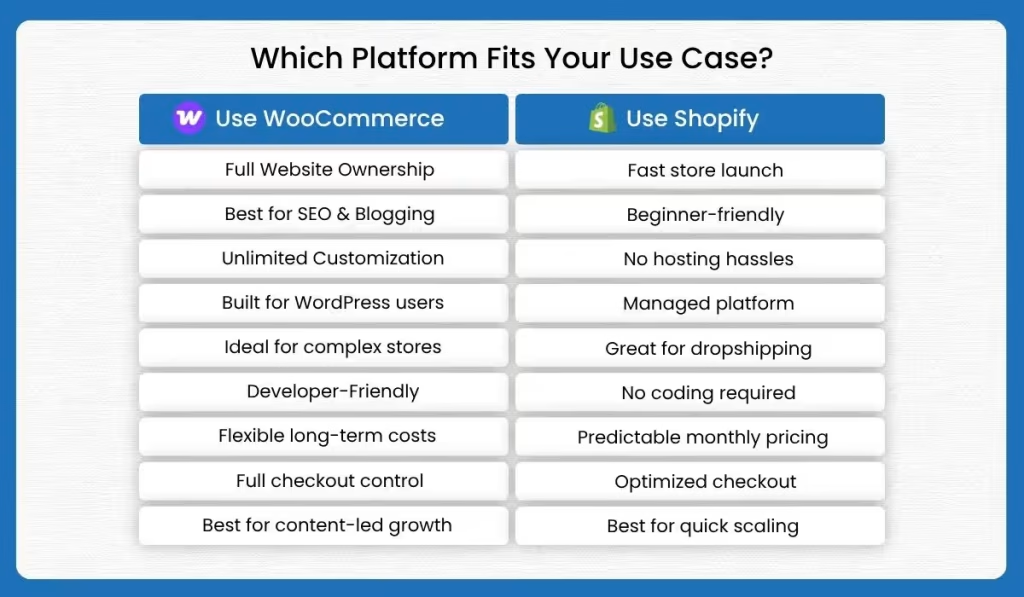
Generic advice rarely fits a specific business. The breakdown below maps common scenarios to the platform that performs better there.
1. Beginners with no technical background: Shopify wins here. Its guided setup and managed hosting remove nearly every technical barrier to launching fast. You can publish a working store within a single afternoon, even without coding knowledge.
2. Content-driven and blog-first brands: WooCommerce wins here. Native WordPress blogging and SEO tools support long-term organic growth strategies effectively. Brands building authority through tutorials, guides, or editorial content benefit from this tighter content-commerce integration.
3. Dropshipping businesses: Shopify wins here. Its app ecosystem includes mature, well-tested dropshipping integrations that connect suppliers automatically. Order fulfillment, tracking sync, and inventory updates happen with minimal manual intervention.
4. Multi-vendor marketplaces: WooCommerce wins here. Open code access allows developers to build complex vendor and commission logic without platform restrictions. Marketplace plugins like Dokan extend this functionality even further for ambitious projects.
5. Enterprise and high-volume retailers: Both compete here. Shopify Plus offers managed enterprise infrastructure with dedicated support. Custom WooCommerce builds offer deeper backend control for complex business logic and legacy integrations.
The S.C.A.L.E. Framework
Use this five-point framework to decide with confidence. It works for any ecommerce founder evaluating woocommerce vs shopify.
- S – Support Capacity: Do you have developer access, or do you need managed support?
- C – Cost Structure: Do you prefer predictable subscriptions or variable development costs?
- A – Audience Channel: Does your growth depend on content and SEO, or fast product launches?
- L – Long-term Control: Do you need full code ownership, or is convenience more valuable?
- E – Expansion Plans: Will you scale into multi-vendor, subscriptions, or international stores soon?
Score each factor honestly for your business. Heavier weight toward control and content points to WooCommerce. Heavier weight toward speed and managed support points to Shopify.
Conclusion
Neither platform wins universally in the woocommerce vs shopify debate. WooCommerce rewards businesses that value control, content, and long-term customization. Shopify rewards businesses that value speed, simplicity, and managed infrastructure.
Match the platform to your team’s technical capacity and growth plan. You may need woocommerce development services or full shopify website development. The right choice comes from your business priorities. Platform popularity alone should never decide it.
Frequently Asked Questions About WooCommerce vs Shopify
1. Is WooCommerce better than Shopify for SEO?
WooCommerce generally offers deeper SEO control because it runs on WordPress. WordPress provides flexible permalinks, native blogging, and granular metadata options for long-term content strategies.
2. Is Shopify cheaper than WooCommerce?
Not always. Shopify costs are predictable monthly fees, while WooCommerce costs depend on hosting and development choices. Small, simple stores often run cheaper on WooCommerce.
3. Do I need a developer for WooCommerce?
Basic stores do not strictly require one. Custom features, security hardening, and performance tuning usually need a qualified woocommerce developer for reliable results.
4. Can WooCommerce handle high traffic stores?
Yes. With proper hosting, caching, and a tuned database, WooCommerce supports large catalogs and high-volume traffic comfortably.
5. Which platform is easier for beginners?
Shopify is easier for non-technical founders. It bundles hosting, security, and support into one managed subscription with minimal setup steps.
6. Is Shopify good for dropshipping?
Yes. Shopify’s mature app ecosystem includes dedicated dropshipping integrations that automate supplier orders and inventory syncing efficiently.
7. Can I switch from Shopify to WooCommerce later?
Yes, migration is possible using export tools and developer support. Product data, themes, and apps need careful rebuilding during the move.
8. Does WooCommerce support multiple currencies?
Yes, through plugins. WooCommerce does not include native multi-currency support, so most international stores add a dedicated currency plugin.
9. Which platform is better for a small local business?
It depends on technical comfort. WooCommerce suits owners with WordPress experience, while Shopify suits owners wanting a simpler, guided setup.
10. Can WooCommerce and Shopify both support headless commerce?
Yes, both support headless setups. WooCommerce uses the WordPress REST API. Shopify uses its Storefront API and Hydrogen framework for custom frontends.
11. Which platform is easier for selling internationally?
Shopify is easier for international selling. Shopify Markets handles currency conversion and tax automatically, while WooCommerce requires additional plugins for similar results.
12. Which platform loads faster out of the box?
Shopify generally loads faster by default because its managed infrastructure includes a global content delivery network. WooCommerce can match this speed with proper hosting and optimization.
13. Is WooCommerce or Shopify cheaper over three years?
Costs converge at scale. WooCommerce shifts spending toward hosting and development. Shopify shifts spending toward subscriptions and apps. Both often land in a similar range.