

So you’ve launched a website. Entered in the Google system, but you still lack one thing. And that is trust. Yes, building trust with Google is very important. But it can take more than a year to reach from 0 to just 10 DA.
Most website owners don’t consider it because DA isn’t a direct ranking factor. Google doesn’t use it. But it’s one of the most reliable indicators of how well your site could perform in search. Simply put, DA (Domain Authority) / DR (Domain Rating) is your site’s reputation score, built from links, content, trust signals, and technical strength.
But seriously, does domain authority even matter anymore?
Well, Google’s search is now powered by AI, powered by entities (like people, brands, concepts, locations), powered by user experience, and drastically flooded with AI content. But Domain Authority (DA) is still a useful signal of how strong and trusted your site looks in the bigger search ecosystem.
This blog breaks down how to actually increase Domain Authority while growing real organic traffic.
Key Insights Before You Begin
1. Domain Authority shows your backlinks, content depth, technical foundation, and brand credibility across markets.
2. Boosting DA in 2026+ requires:
- Fast, stable pages with clean architecture
- Deep, expert-backed content clusters
- Adaptation to AI-driven SERPs, voice, and video search
- Trust-building signals like structured data and E-E-A-T
3. This guide is perfect if you’re:
- Growing a new website
- Running an online business
- Collaborating with a digital agency
- Trying to step into global organic search
4. You’ll learn:
- What DA really measures and what it doesn’t.
- Proven strategies to raise DA with real organic results to show.
- Checklist-style breakdowns of technical SEO, content, AI, multimedia, and international SEO.
- Tools and KPIs you should track so you know it’s working.
What is Domain Authority?

Domain Authority (DA) is a metric created by Moz. It’s a score from 1 to 100 that predicts how likely a website is to rank in search engines based on backlinks, trust signals, and overall authority. Although, Google doesn’t use DA as a ranking factor. But increasing domain authority still matters. Why? Because it’s one of the clearest indicators of:
- How strong your site looks to search engines
- Whether other authoritative sites trust and link to you
- If you’re building signals that align with Google’s core ranking systems
So while DA doesn’t directly boost your rankings, it gives you a vivid picture of how likely you are to rank. And more importantly, it keeps your strategy focused on real SEO fundamentals and metrics.
Why Does DA Still Matter in 2026?
Let’s understand why Domain Authority Matters in 2026 and even beyond:
- It mirrors reality: High DA usually correlates with stronger organic traffic, better rankings, and credible content. If your DA is growing over time, you’re on the right track.
- It reflects your link profile: In an era where link spam is dead and Google’s AI is smarter, earning good backlinks (not just collecting them) is more critical than ever.
- It helps you benchmark: Want to compete in a niche? A quick look at your competitors’ DA shows you what you are getting into.
- It drives trust: Clients, journalists, and even partnership platforms still look at DA when evaluating credibility.
What Drives DA?
Domain Authority (DA) is not a Google metric, but it reflects signals Google does care about. It includes quality backlinks, content depth, user experience, and technical soundness. From 2026 onward, Authority is increasingly tied to E-E-A-T, as always, entity-based indexing, and technical trust. So, here’s what actually affects your site’s DA:
1. Quality Backlinks from Authoritative, Relevant Websites
Backlinks are weighted signals that show trusted sources vouch for your content. But in 2026 and beyond:
- Link relevance and context outweigh sheer volume. So 10 more backlinks don’t matter if they’re not from a relevant website.
- Links from high-authority publications, institutions, and industry-relevant platforms carry the most impact.
- A diversified link profile from international, niche, and media outlets boosts global authority, especially if going multilingual.
This aligns with industries like digital PR and brand storytelling, where backlinks are earned organically through data-led content and expert perspectives. And, not purchased or scaled via spam.
2. Topical Authority via Content Clusters
Google now prioritizes topic-based rankings over keywords. That’s why building content hubs like pillar pages with internally linked supporting articles is key to signaling expertise and experience. Why? Because this model directly supports E-E-A-T, one of Google’s strongest filters for separating real authority from AI noise.
3. Strong Technical SEO Foundations
DA does consider technical health, such as:
- Core Web Vitals (LCP < 2.5s, INP < 200ms, CLS < 0.1)
- Secure pages – HTTPS everywhere
- No crawl errors
- Structured data (JSON-LD for articles, products, FAQs)
For Google, user experience is equal to ranking, and tools like PageSpeed Insights, Lighthouse, Screaming Frog, and GSC help verify on-page and structural performance. The stronger this foundation, the more your authority signals actually get indexed and weighted.
4. Internal Linking and Site Architecture
A flat, logical structure and smart internal linking distribute authority throughout your pages. This supports both crawl depth and topical relevance, especially important if you’re still building external backlinks. Well-structured URL hierarchies and regular linking from authority pages like case studies or featured articles increase crawler trust and help establish site-wide DA.
5. User Engagement and Content Quality Signals
Google increasingly incorporates UX (User Experience) signals to gauge content credibility. It includes low bounce rates, good dwell time, and effective mobile-first usability. But these are less about DA itself and more about performance on SERPs. But when combined with the above tactics, they reinforce your overall site strength and indirectly help improve your DA over time.
What Does Not Drive DA?
Many marketers get confused and focus on irrelevant tactics that do not contribute to increasing domain authority. So, let’s understand what does not drive DA:
- Domain age alone has no effect
- Social signals, likes/shares without real backlinks don’t move DA
- Keyword stuffing or ranking for easy terms isn’t authoritative
- Buying backlinks or using outdated directory submission tactics can hurt DA over time
- Overlong content without relevance or expertise doesn’t equal “more authoritative”
Now you know that these are irrelevant to increasing DA. So, what makes DA go up? What should you do? Let’s get deeper and understand each and every checklist designed and researched by our experienced digital marketers.
Checklist to Increase Your Domain Authority

Increasing Domain Authority is a long-term and consistent method. Below is a step-by-step roadmap that includes technical excellence, content depth, modern SEO adaptation, and future-ready SEO strategy. Use this as your go-to checklist:
1. Technical SEO: Site Performance and Structure
- Audit Core Web Vitals
- Serve everything over HTTPS
- Use schema markup for articles, products, videos, FAQs, and others
- Fix 404s, redirect chains, crawl errors
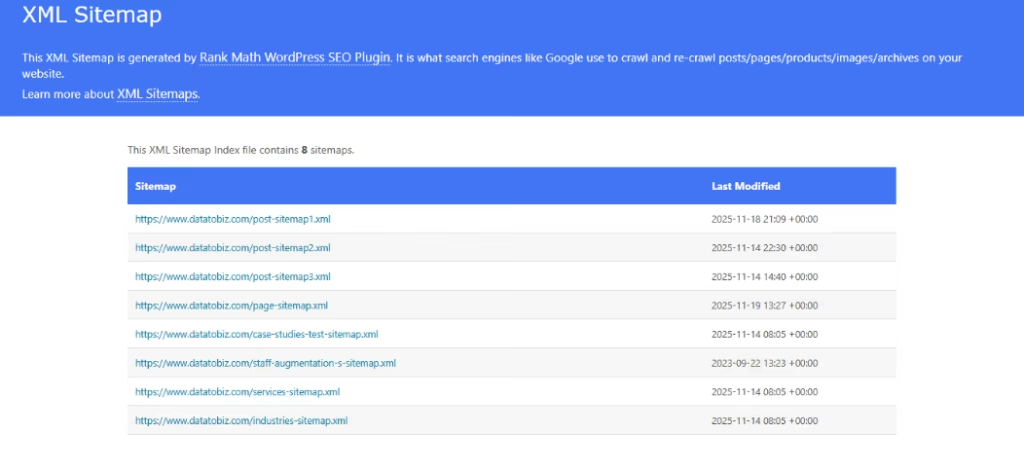
- Ensure a logical URL structure and XML sitemap submission
- Use tools like PageSpeed Insights, Lighthouse, Screaming Frog, and GSC regularly
2. Content Strategy: Authority, E-E-A-T, and Adaptation
- Build content clusters (pillar and supporting pages) around core topics
- Include data, expert quotes, and case studies where possible
- Avoid AI-only content: use AI for drafting, humans for validating and adding value
- Use answer-first writing for Google AI Overviews and featured snippets (50-word answers)
- Keep content updated with new insights, stats, and keywords
3. AI, Generative Search, and SERP Evolution
- Create content that Google’s AI Overviews can cite
- Structure answers with clear headings, FAQs, and schema
- Expand entity-based SEO: cover topics comprehensively, not just keywords
- Monitor SERP changes and prioritize interactive results, knowledge panels, and snippets
4. Voice Search and Conversational SEO
- Write in a conversational tone for how, why, and what questions
- Add FAQ sections, especially with the FAQ schema
- Target long-tail phrases and questions users ask verbally
- Make sure your site is mobile-first, which includes voice search is equal to mobile search
Technical SEO: Site Performance and Structure
Technical SEO is the basic infrastructure that supports Crawling and Indexing. So, if technical SEO is not optimized up to the mark, pages might not crawl effectively. Then, no matter how good your content and keywords are, it’s useless. So let’s understand technical SEO best practices:
1. Core Web Vitals – The UX Performance Trifecta
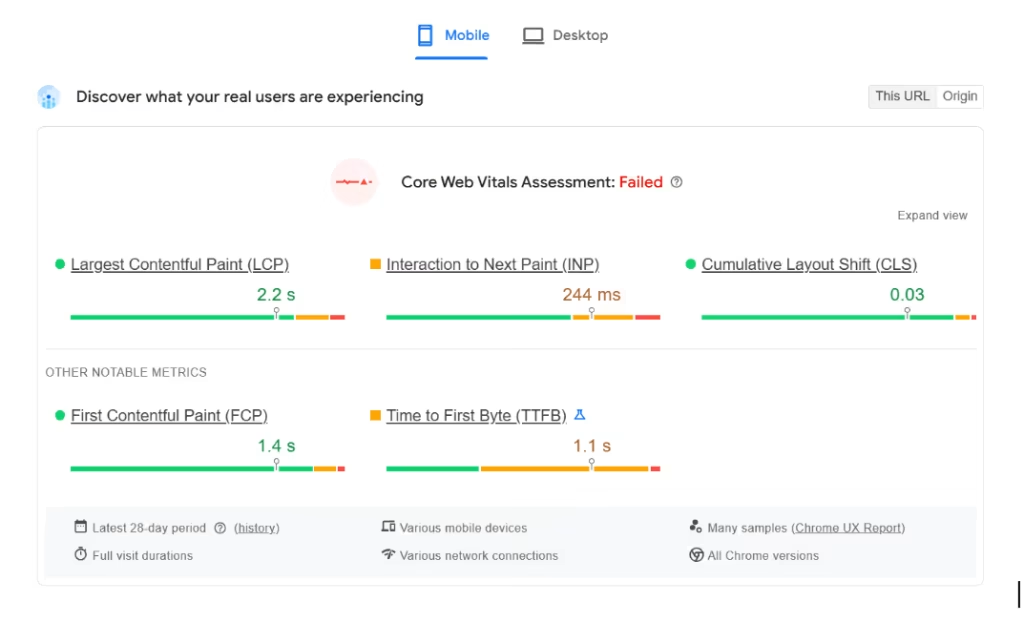
Google’s Core Web Vitals directly impact rankings, crawlability, and user experience. These metrics tell Google how your page feels to users, especially on mobile. And this metric drives the domain rating:
- LCP (Largest Contentful Paint): It means how fast the main content loads.
Aim: Less than 2.5 seconds - INP (Interaction to Next Paint): It means how fast your page responds to clicks or taps.
Aim: Less than 200ms - CLS (Cumulative Layout Shift): It shows whether the layout jumps around as it loads.
Aim: Less than 0.1
Why is the UX Performance Trifecta so necessary? Well, Google measures real-world UX signs, not just server-side data. In 2026, users now expect instant loading and stable visuals. So, poor vitals are equal to high bounce rates. And high bounce rates lead to fewer ranking opportunities.
How To Fix It?
- Serve images via next-gen formats such as WebP, AVIF
- Use a CDN for global asset delivery
- Minify CSS/JS and consider lazy loading
- Optimize hosting or switch to cloud-based setups
2. Mobile-First, Always
Over 60% of searches still happen on mobile devices, and most voice searches too. Since Google’s mobile-first indexing rollout, your mobile experience truly defines how Google sees your site. So, make sure:
- Your site is fully responsive on both mobile and tablet screens.
- Touch elements are spaced properly
- Fonts are readable on small screens
- No intrusive and unwanted interstitials or pop-ups
3. Structured Data and Schema
Structured data, also called schema, is code added to your pages that helps Google clearly understand what your content is about. Google uses a format called JSON-LD, and in recent years, they’ve added a ton of new schema types.
Google even said that structured data is now “the foundation for factual AI responses.” It helps your content show up in AI-powered search results, not just traditional listings. You can use schema for things like blog posts, products, FAQs, videos, or local business pages. Just make sure the code matches the actual content on your page.
When you use schema correctly, your site becomes eligible for rich results, like star ratings, FAQ listings, or video previews, and gets better visibility in Google’s new AI features and Knowledge Graph.
Here is an example of how Schema Mark-up looks on screen:

4. Security and Technical Hygiene

Trust doesn’t work without safety:
- Serve everything over HTTPS, not HTTP
- Fix crawl errors, loops, and misconfigured redirects
- Remove duplicate content or use canonical tags
- Regularly audit using Google Search Console, Screaming Frog, or Ahrefs Site Audit
5. Site Architecture & Internal Linking
Moz notes that are improving internal linking alone can gradually lift your Domain Authority, and it’s 100% within your control. And Authority flows through your site via internal links. So, build scalable structures like:
- Clear URL hierarchy. For example: /services/seo/ or /blog/link-building-guide/
- XML sitemap and Robots.txt to guide crawlers.
- Internal linking from high-authority pages to new or low-ranking ones.
- Use descriptive anchor text and avoid generic phrases like click here.
Content Strategy: Authority, E-E-A-T, and Adaptation
To rank well in 2026 and increase domain authority, you need content that proves your expertise and adapts to how search is changing. That means building authority with E-E-A-T and creating content built for AI, snippets, voice, and visual search.
1. Topical Authority & Content Hubs
Instead of writing random blog posts, create content clusters. That means writing multiple articles on one topic and linking them all together. This tells Google you really know the subject.
For example, if you offer SEO services, write a main guide (pillar page) and then separate articles like What is On-Page SEO?, Off-Page SEO Tips, etc. It shows expertise and trust, what Google calls E-E-A-T (Experience, Expertise, Authoritativeness, Trustworthiness).
2. Answer-Focused and Concise Content
Google loves content that answers questions quickly, especially in their new AI Overviews. So write short intro paragraphs from 40–60 words that directly answer common questions.
This makes your content more likely to show up as featured snippets. Use lists, tables, and clear headings to help both humans and search engines understand your points fast.
3. AI-Driven Content (With Human Touch)
You can use tools like ChatGPT to help write or research content, but don’t stop there. Google prefers content that’s checked by humans and backed by expertise. So use AI as a starting point, then add real insights, fact-checks, and expert opinions.
Google rewards content that’s accurate, helpful, and trustworthy. So, no, not just lots of text created by machines.
4. Zero-Click & Answer Engine Optimization
More people get answers right on Google without clicking any links. This is called zero-click search. To show up in these results, structure your pages so they directly answer “what is…”, “how to…”, and “why does…” questions.
Even though some snippet types are changing, using FAQ sections and the FAQ schema can still help you appear in featured snippets and voice search results.
5. Multimedia Content
Don’t just write text, add videos, images, audio clips, and graphics. Google and Bing now show visual content like videos in search results. Use YouTube or embedded website videos with titles, captions, and transcripts. Optimize images with good alt tags.
For example, an SEO specialist is working on keyword research. Use schema for videos and podcasts if you have them. Visual and interactive content improves engagement and helps you show up in more search results.
6. User Experience & Engagement
Google now sees user experience (UX) as part of content quality. So, if people enjoy using your site, you rank higher and can increase domain authority. So keep your pages easy to read, mobile-friendly, and fast-loading.
Avoid annoying pop-ups and bad navigation. A site that’s easy to use keeps visitors longer, leading to a low bounce rate, higher time on page, which sends positive signals to Google. Tools like heatmaps and behavior analytics can help you fix problem areas.
AI, Generative Search, and SERP Evolution
Search has changed. Google and other search engines now use AI to summarize, predict, and even answer user questions. That too, without anyone clicking through to a website. So if you want your content to appear in these new search features to boost ranking and increase domain rating, you need to understand what’s happening and how to adapt.
1. AI Overviews & Answer Engines
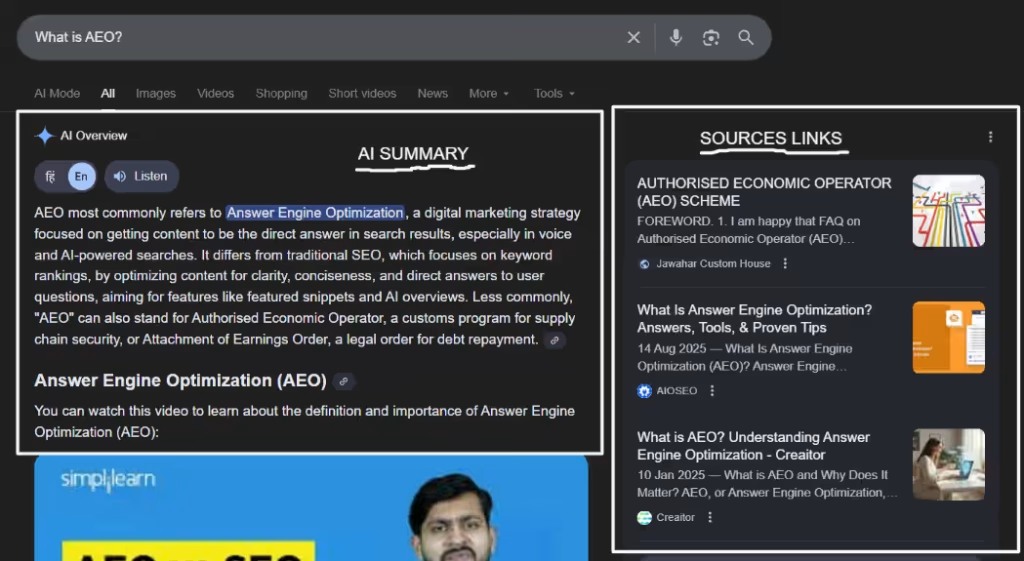
Google has introduced AI Overviews also called Gen AI summaries, which show a quick answer at the top of the search results by pulling information from different websites. Google also said that “links included in AI Overviews get more clicks than if the page appeared as a traditional listing.”
That means if your content gets featured inside one of these answers, you could get more traffic than before, even if you’re not the top result. To make this happen, you need to create authoritative, link-worthy content. Look for search queries where the AI summary doesn’t give a full answer, and then publish content that fills in the gaps.
2. Semantic and Entity Search
Google doesn’t just look for keywords anymore. It uses language models (LLMs) and something called a knowledge graph to fully understand topics. So instead of focusing on just keywords, structure your content around entities (people, brands, concepts) and facts.
Use tools like schema and consistent vocabulary to help Google see your site as a reliable source. This means writing comprehensive content that covers entire topics, not just exact keyword matches
3. Privacy and Personalization
Because third-party cookies are disappearing and new privacy rules are coming into play, first-party data is now even more important. Collect data from users directly, with their permission, using tools like analytics, CRM, or CDPs. This tells you what your audience likes, which helps you create better content and keywords.
For example, if your analytics show that people spend a lot of time on guides about “local SEO”, you might create more content on that topic. You can also use first-party data to create lookalike audiences in ads, which can lead to more brand searches and improve your SEO indirectly.
4. Content Quality Over Format
Google has made it clear: “whether you’re using AI-generated content or not, our systems seek to reward high-quality information from reliable sources.”
That means it doesn’t matter if you use AI, what matters is the accuracy, trustworthiness, and usefulness of your content. Include author bios, cite data or studies, and be transparent. Expert-reviewed and fact-checked content will always stand out, even in an AI-driven world.
5. Adaptation to New SERP Features
Search result pages (SERPs) keep changing. Expect more things like:
- Shopping carousels
- Local business boxes
- Knowledge panels with interactive 3D images
- AI answers and videos
You can prepare by adding product schema, local business schema, and even 3D model markup if you’re in e-commerce or product-based industries. For searches where Google doesn’t show many website results, like short AI summaries, think outside the box and create content for social media, mobile apps, or other platforms to keep users engaging with your brand.
Voice Search and Conversational SEO
Voice search has woven into daily life via Google Assistant, Siri, Alexa, and even car dashboards. And because people speak differently than they type, optimizing for voice search means rethinking how you create content.
1. Conversational Queries
People talk to voice assistants like they’re asking a real person, so their questions are longer and sound natural. On average, voice searches are around 29 words long and usually start with things like “how”, “why”, or “where”.
To show up in these results, write content using natural, question-based language. For example, how do I improve my website speed? Why is domain authority important? SEOmator notes that voice searches are more “conversational” and recommends structuring your content in a way that answers these questions directly.
2. FAQ and Q&A Sections
Add FAQ sections to important pages like your service or product pages. Use proper headers (like H2 or H3) and add FAQ schema markup so voice assistants can easily read and understand your answers.
According to experts, adding FAQs that answer real questions people might ask their voice assistants helps you show up in voice search and can also help you win featured snippets, which are often used for voice answers.
3. Local and Mobile Focus
A lot of voice searches include phrases like “near me” or are done on mobile devices. So make sure your Google Business Profile is fully updated with correct business information, such as name, address, phone number, hours, etc.
Also, use local keywords and add local schema (like LocalBusiness or GeoCoordinates) so voice search tools can pull your business when someone nearby asks for it.
4. Measuring Voice Impact
Tracking voice search traffic isn’t always obvious, but here’s how you can estimate it:
- Look in Google Analytics for search terms marked as “(not set)” with short sessions.
- Track your featured snippet rankings. If you’re showing up there, you’re likely showing up in voice responses too.
- Use specialized voice SEO tools or filters like in SEMrush or Ahrefs to monitor your presence in voice results.
Tools and Platforms To Use
Want to build your Domain Authority without wasting time? Use these platforms to help with audits, backlinks, content strategy, and performance. All of which are critical for modern SEO.
SEO and Site Audit Tools
- Google Search Console – Monitors indexing, search queries, site performance issues
- Google Analytics 4 – Shows traffic sources, user behavior, conversions
- Screaming Frog – Crawls your site to find errors, broken links, and technical issues
- Ahrefs / SEMrush / Moz – Backlink research, competitor analysis, Rank tracking
Content & Keyword Tools
- AnswerThePublic – Visualizes real user questions (great for voice/content ideas)
- SurferSEO / Clearscope – Helps optimize content for on-page relevancy and semantic keywords
- ChatGPT with expert review – For fast drafting, then refine with human expertise
Technical Performance & UX
- Google PageSpeed Insights – Measures Core Web Vitals and performance
- Lighthouse – Overall SEO, accessibility, and performance audits
- GTmetrix – Site speed testing with waterfall breakdown
Backlink & Brand Monitoring
- Ahrefs Alerts / BuzzSumo – Monitor brand mentions and link opportunities
- Link Whisper / Internal Link Juicer – Helps automate smart internal linking
KPIs to Track for Domain Authority Growth
- Domain Authority / Domain Rating: Shows how strong your backlink profile is. Track it using Moz or Ahrefs.
- Organic Traffic & Sessions: Use GA4 to watch traffic trends over time.
- Keyword Rankings & Visibility: Check how many keywords you’re ranking for especially in the top 10 and for featured snippets.
- Click-Through Rate (CTR): From Google Search Console. Tells you how often your pages are clicked when seen in search.
- Bounce Rate & Engagement: Look at time on page, pages per session, and bounce rate. Better engagement means better content.
- Core Web Vitals: Track LCP, INP, and CLS to measure site speed, responsiveness, and layout stability.
- Backlink Profile: Regularly check new backlinks and how many unique websites referring domains link to you.
- International Metrics: If you’re targeting multiple countries, monitor traffic by region and local keyword rankings.
- Social & Video Engagement: Likes, shares, and video watch time give clues about content value and reach.
- Conversion Rate (from Organic): Tracks how many organic visitors take action, such as sign up, buy, or contact. This is the true measure of SEO success.
Conclusion
Increasing your Domain Authority is about building a website that earns trust, delivers value, and adapts to the future of search. From core web vitals and structured data to in-depth content clusters and voice-ready answers, every piece plays a role in how Google perceives your authority.
The search landscape in 2026 and beyond is about relevance, reliability, and readiness for AI-powered discovery. Do that right, and your DA will naturally rise alongside your real traffic, rankings, and brand presence.
Focus on technical health. Build content that feels like a library, not a blog. Speak to users the way they search. And remember: authority is earned, not tricked.
Frequently Asked Questions (FAQs)
1. What is a good Domain Authority for a new website?
There’s no magic number, but most new sites start at DA 1–10. A score of 40+ is generally strong for growing brands, and 60+ is considered authoritative. Aim for steady growth over time, not sudden spikes.
2. How long does it take to increase Domain Authority?
It depends. If you’re consistently creating valuable content and earning quality backlinks, you can see improvement in 3–6 months. But DA growth is gradual and measured in quarters, not weeks.
3. Does AI-generated content hurt Domain Authority?
Not if it’s reviewed, fact-checked, and enhanced by humans. Google says: “Our systems seek to reward high-quality information from reliable sources.” So, it doesn’t matter whether AI wrote it.
4. Should I focus on building backlinks or creating content first?
Start with content. You need solid, helpful, relevant pages for others to link to. Once you’ve built topical depth, outreach and backlinks will come more naturally and stick.
5. Does Domain Authority affect Google rankings?
DA doesn’t directly impact rankings. However, sites with high authority usually rank better because they’ve earned strong backlinks, have solid content, and follow good SEO practices.
6. Is voice search really important for SEO?
Yes. About 50% of searches will be voice-driven in the next few years. Structuring content around natural language questions is key to capturing this traffic.