


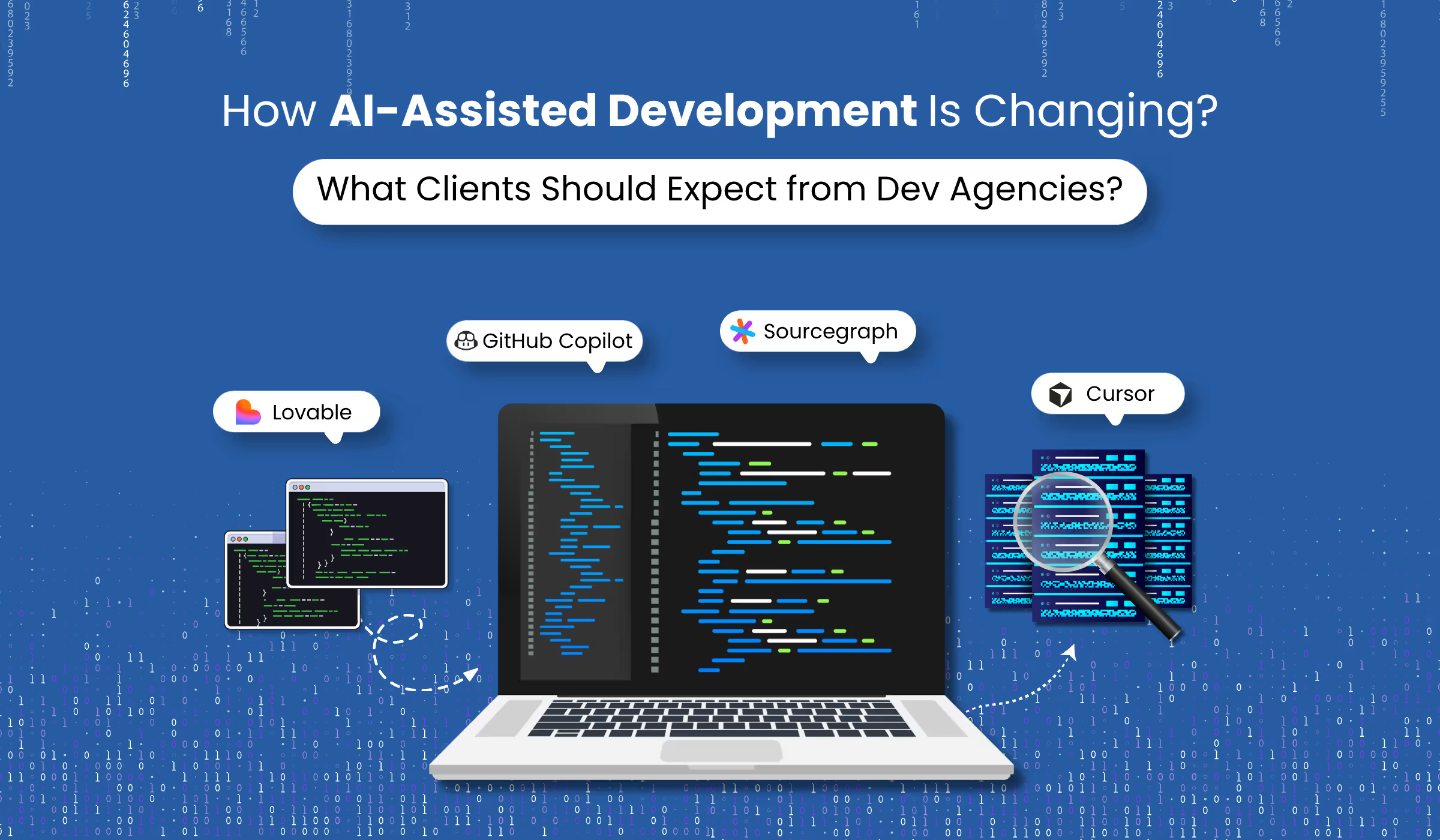
Something has shifted in how development agencies build software. It is not a small adjustment. AI-assisted development has entered the workflow of most serious dev shops.
The change touches timelines, costs, team roles, and the quality bar. Clients who know this are asking sharper questions. Clients who do not know it are getting surprised. This guide answers the core question: what should you, as a client, expect from a dev agency that uses AI?
What AI-Assisted Development Actually Means?
AI in software development means using machine-learning tools inside the code-writing process itself. This is not chatbots or automation bolted onto a finished product. Developers use tools like GitHub Copilot and Cursor to write, review, and test code directly in their editors.
The tools suggest entire functions. They flag security vulnerabilities. They auto-generate tests. Developers still make every final decision. Think of it as a highly capable junior developer sitting next to every engineer, all day, every day.
How AI Coding Tools Are Actually Used?
Most clients imagine that AI writes the whole project at once. That is not how it works.
AI coding tools operate inside specific tasks:
- Writing boilerplate and repetitive code blocks
- Generating unit tests automatically
- Scanning code for security and performance issues
- Suggesting solutions for known error patterns
- Speeding up documentation and code commenting
The developer still architects the solution. The developer still owns logic decisions. AI handles the repetitive and formulaic parts.
The Productivity Numbers Are Real. So Is the Nuance.
A controlled study by Microsoft Research tested GitHub Copilot on 95 professional developers. The group using Copilot completed tasks 55.8% faster than the control group.
(Source: Peng et al., Microsoft Research / arXiv, 2023.)
Stack Overflow’s 2025 Developer Survey found that 84% of developers now use or plan to use AI tools. That number was 76% just one year before.
These are real gains. But they come with an important caveat.
GitClear’s 2024 analysis of over 153 million lines of code found that AI-assisted code shows 4x more code duplication compared to non-AI projects. That creates long-term maintenance risk.
Speed without governance creates technical debt. Good agencies account for this from the start.
| “AI-induced technical debt is a good way to describe the side effects of overinflated expectations of AI-generated code. AI code assistants excel at adding code quickly, but the output may require significantly more revisions before reaching production quality.” ~ Mitch Ashley, VP and Practice Lead, DevOps and Application Development, The Futurum Group (via DevOps.com) |
These numbers surface a real problem. Not all agencies handle AI with the same discipline. Some use it carelessly. Others build real governance around it. This gap matters a lot to you as a client. The agency’s approach to AI directly determines your project outcome.
So how do you tell a disciplined AI-first agency from one that just installed Copilot last week?
A simple four-stage framework helps you assess exactly that.
How to Assess Any Dev Agency’s AI Maturity Before You Sign a Contract?
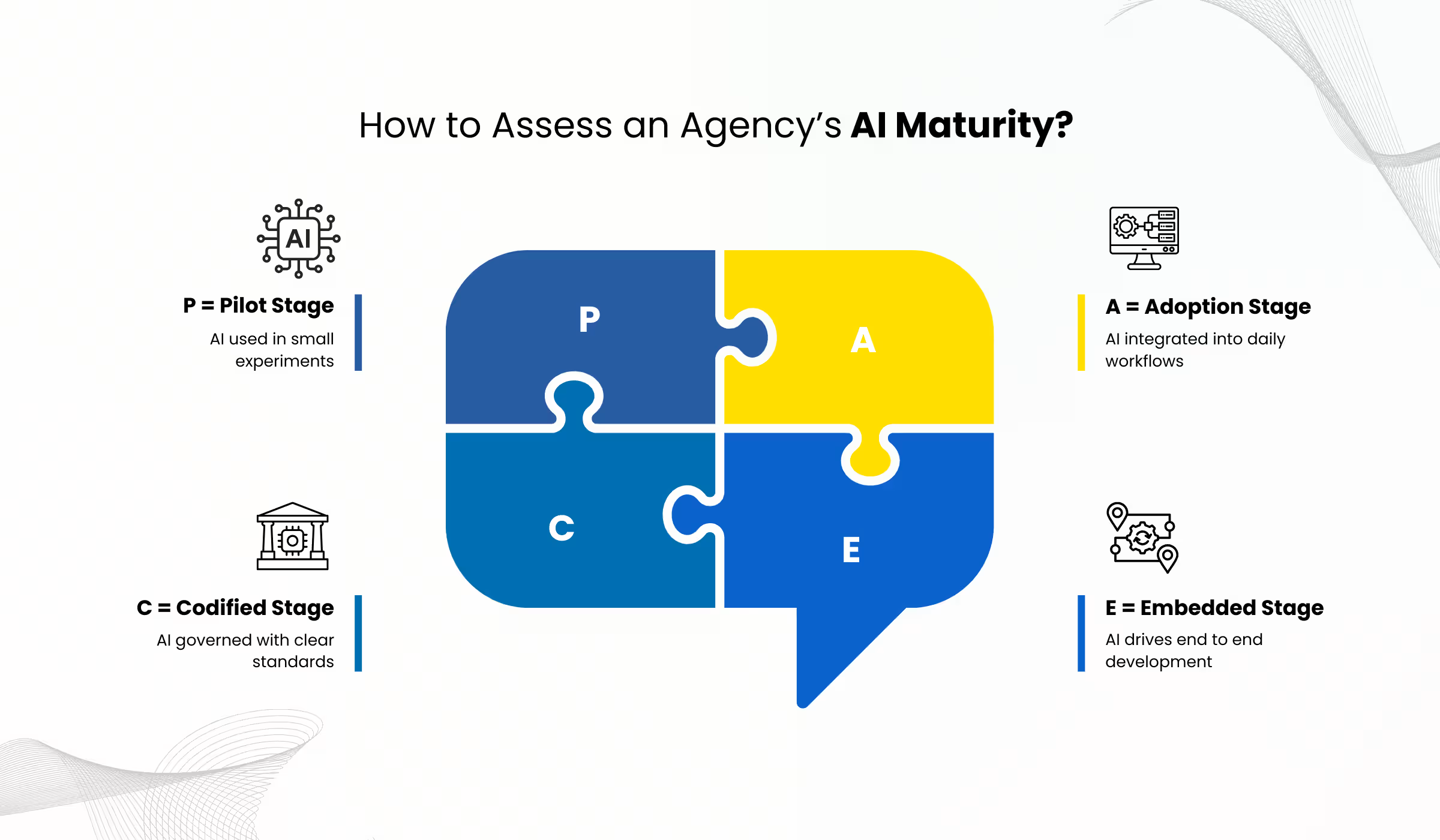
Not every agency that says it uses AI actually uses it well. Most sit at very different levels of readiness. This four-stage PACE Framework helps you ask the right questions. It helps you find out where your agency actually stands.
P: Pilot Stage
The agency tries AI tools on low-risk side tasks. Results are inconsistent. Human review stays mostly manual. They are still experimenting.
A: Adoption Stage
AI tools now enter the standard workflow. Developers use Copilot on most projects. Code review processes start to adapt around AI output.
C: Codified Stage
The agency builds governance around AI use. Clear quality checklists exist. Clients see transparency about what AI writes and what humans review.
E: Embedded Stage
AI runs across the full software development lifecycle. Testing, security scanning, documentation, and code review all use AI tools. Human expertise directs strategy and architecture.
Ask your agency directly: which stage are you at? Their answer tells you a lot about how they will treat your project.
Traditional Agency vs AI-Assisted Agency: How the Client Experience Differs
Here is a clear comparison of what changes when your agency uses AI:
| Factor | Traditional Agency | AI-Assisted Agency | Client Impact |
| First Draft Speed | 2 to 4 weeks | 3 to 7 days | Faster project starts |
| Bug Rate (early) | Higher (manual) | Lower (auto-scan) | Fewer revision cycles |
| Cost Structure | Pure hourly billing | Mixed or outcome-based | Better budget clarity |
| Code Review | Manual only | AI plus human review | Higher code quality |
| Tech Debt Risk | Standard risk | Higher if not governed | Needs oversight SLA |
| Scalability | Team-size limited | Tool-augmented | Faster scaling |
AI-assisted agencies move faster and deliver higher initial quality. But they carry new risks around tech debt and governance. These risks require clear accountability from day one.
How AI for Web Development Is Changing What Gets Built and How Fast?
AI for web development shows up in four main areas:
- Front-end generation: AI produces layout code, component libraries, and responsive design code faster.
- Back-end scaffolding: API structure, authentication logic, and database queries get generated in minutes.
- Testing: Automated test suites that took days to write now take hours.
- Security: AI tools flag vulnerabilities like SQL injection and XSS during writing. Not after deployment.
Clients can expect faster initial builds. The key word is initial. Review and refinement still require the same human attention.
What AI-Assisted Development Cannot Fix: Downsides Clients Must Know?
Trust requires honesty. Here is what AI tools do not solve.
- Context blindness: AI tools do not understand your business logic. Developers must translate your goals into clear decisions.
- Security gaps: A 2024 study found that 29% of AI-generated Python code contains potential security weaknesses. Human review stays mandatory.
- Code duplication: AI-generated code repeats patterns. This bloats codebases without disciplined oversight.
- Over-reliance risk: Junior developers who lean too heavily on AI may not build the deep problem-solving skills senior work demands.
- Hallucinations: AI tools sometimes suggest solutions that look correct but introduce bugs. Validation is not optional.
A credible agency talks about these risks early. If they only sell speed, push back with harder questions.
| “To maintain code quality, developers need to understand the attributes that make up quality code and prompt the tool for the right outputs. Without this, teams can benefit from AI tools while silently accumulating quality risks.” McKinsey Global Survey on AI, 2025 (via DevOps.com) |
What Should Clients Expect from a Dev Agency Using AI in 2026?
The benefits of AI in software development are real. But clients need correct expectations from day one.
1. Expect Faster Timelines, Not Zero Errors: AI compresses early-stage build time significantly. Review and testing stages still require full human attention. Do not expect both speed and zero revisions.
2. Expect Transparent Billing: AI tools reduce hours on certain tasks. Ask your agency how that efficiency passes to you. A disciplined agency adjusts its pricing model accordingly.
3. Expect Governance Documentation: Ask to see their AI usage policy. Ask how AI-generated code gets reviewed. Ask what human checkpoints exist before deployment.
4. Questions Every Client Should Ask Before Hiring:
- Which AI coding tools does your team use daily?
- How do you review AI-generated code before it ships?
- How do you handle technical debt from AI output?
- Do you have a security audit step for AI-assisted projects?
- How does AI usage affect my project timeline and cost?
What is The Future of Web Development with AI?
The future of web development AI points toward agentic systems. Not just autocomplete.
Gartner forecasts that 90% of enterprise software engineers will use AI coding assistants by 2028. That is up from less than 14% in early 2024.
AI agents will handle longer, more autonomous coding sessions. They will read requirements, write code, run tests, and submit pull requests with minimal human prompting. This does not remove the need for expert developers. It changes what expertise means.
Architecture thinking, security judgment, and business context become the premium skills.
Agencies that train their teams on AI governance will pull ahead. Those that just hand out tool licenses without process will create more problems than they solve.
Still Not Sure If Your Agency Is Actually AI-Ready? Good.
Most aren’t. They’ll say they use AI. They’ll show you tools. What they won’t show you is how they control quality, security, and long-term maintainability.
That gap is where projects quietly go wrong.
At Idea Fueled, we don’t treat AI like a shortcut. We treat it like a system that needs discipline. Every line of AI-assisted code is reviewed, validated, and built to scale, not just ship fast.
If you want a second opinion before you commit to an agency, we’ll give you one. No sales script. No vague answers. Bring us your project, your proposal, or even another agency’s plan. We’ll tell you exactly what holds up and what doesn’t.
Contact us and get a clear, technical breakdown before you sign anything that locks you in.
Conclusion
AI-assisted development is not coming. It is already the standard at every serious agency.
The agencies that use it well combine tool speed with human judgment. They govern quality. They manage technical debt. They communicate clearly about what AI handles and what humans own.
Your job as a client is to ask the right questions. The answers reveal whether an agency uses AI responsibly or just uses it to look modern.
At Idea Fueled, we build with precision. We use AI in software development to move faster without cutting corners on quality, security, or maintainability. If you want a partner who treats your product with that level of care, let’s talk.
Frequently Asked Questions About AI-Assisted Development
1. What is AI-assisted development in simple terms?
AI-assisted development means developers use AI tools like GitHub Copilot while writing code. The AI suggests code, catches errors, and speeds up repetitive work. The developer reviews and approves every output. Humans stay in control of all decisions.
2. Does using AI make software development cheaper for clients?
It can reduce hours on specific tasks like boilerplate code and testing. But it does not guarantee lower project costs automatically. It depends on how the agency structures its pricing. Always ask your agency directly how AI efficiency reflects in your quote.
3. Is AI-generated code safe to use in production?
Not without review. A 2024 study found that 29% of AI-generated Python code contains potential security weaknesses. Every credible agency runs human code review and security audits on AI output before deployment. Ask your agency what their review process looks like.
4. How is AI changing web development timelines?
AI speeds up the first-build phase significantly. A Microsoft Research study found developers completed tasks 55.8% faster with AI tools. Review, testing, and quality assurance still take full time. Expect faster starts, not faster finishes across every phase.
5. What is the difference between AI-assisted development and full AI automation?
AI-assisted development keeps human developers in the loop for every decision. Full AI automation removes that human checkpoint. Most serious agencies use AI-assisted workflows. Full AI automation for custom software does not yet exist at a production-reliable level.
6. How do I know if a dev agency uses AI responsibly?
Ask them four things. Which AI tools do they use? How do they review AI-generated code? What is their policy on technical debt from AI? Do they run security audits on AI output? A responsible agency answers all four clearly and without hesitation.
7. Will AI replace software developers at dev agencies?
No. AI removes repetitive tasks. It does not replace architecture decisions, business logic design, security judgment, or client communication. The demand for developers who understand both AI tools and system design is growing, not shrinking.